
In industrial production, the operating status of rotating machinery directly determines both output and equipment safety. As a key tool in the industrial internet of things (IIoT), a wireless RPM sensor measures rotational speed in real time and sends the data to a remote monitoring system over wireless communication, giving users efficient, intelligent equipment management.
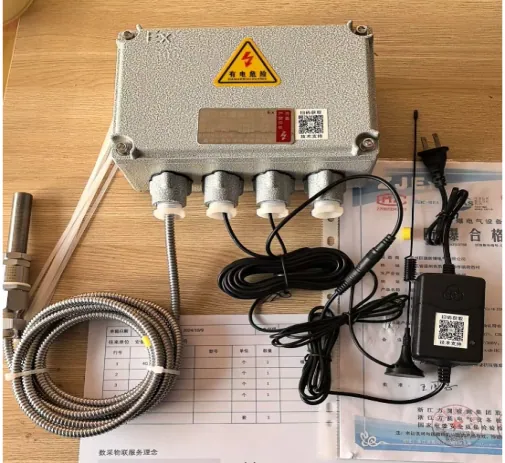
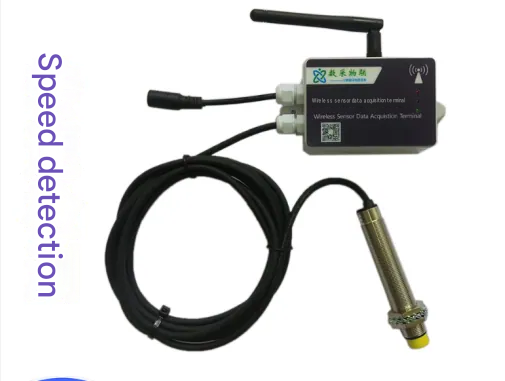
1. Wireless RPM Sensor
1.1 Real-Time RPM Monitoring
The wireless RPM sensor acquires rotational speed data from rotating machinery in real time. Motors, gearboxes, wind turbine generators, pumps and compressors can all be monitored precisely. The sensor responds quickly to speed changes, keeping the data accurate and current.
1.2 Wireless Data Transmission
The sensor supports multiple communication options — 4G, WiFi and LoRa wireless links as well as wired Ethernet. Speed data is uploaded easily to a remote monitoring system or IoT platform. No one needs to be on site: users check equipment status from a phone, laptop or any other terminal, wherever they are.
1.3 Remote Monitoring and Alarms
Through protocol integration, the sensor publishes data to the IoT platform in real time. Users set upper and lower speed thresholds on the platform. When speed moves outside the configured range, the system raises an alarm automatically and notifies users by SMS, email or app push, so problems are caught before they cause equipment damage or production downtime.
1.4 Multi-Device Compatibility
The wireless RPM sensor suits many types of rotating machinery, from high-speed motors to low-speed gearboxes. Customized configurations are available to match different monitoring scenarios, and both standard and explosion-proof versions can be selected for different applications.
2. Application Scenarios
2.1 Industrial Production Lines
Motors are the core power equipment on an industrial production line. With a wireless RPM sensor installed, users monitor running status in real time, spot speed anomalies early, and avoid production stoppages caused by equipment failure.
2.2 Wind Farms
The rotational speed of a wind turbine directly affects generating efficiency. The wireless RPM sensor tracks speed changes in real time, helping O&M staff optimize turbine operating parameters, raise generating efficiency and extend equipment service life.
2.3 Oil and Chemical Industry
In the oil and chemical industries, stable pump and compressor speed is critical. The wireless RPM sensor monitors speed in real time to keep the production process stable and safe.
2.4 Machinery Maintenance
For key components such as gearboxes and bearings, the wireless RPM sensor tracks speed changes in real time, helping maintenance staff detect gear wear or poor meshing early and avoid equipment damage.
Mainstream protocol integration: efficient remote monitoring
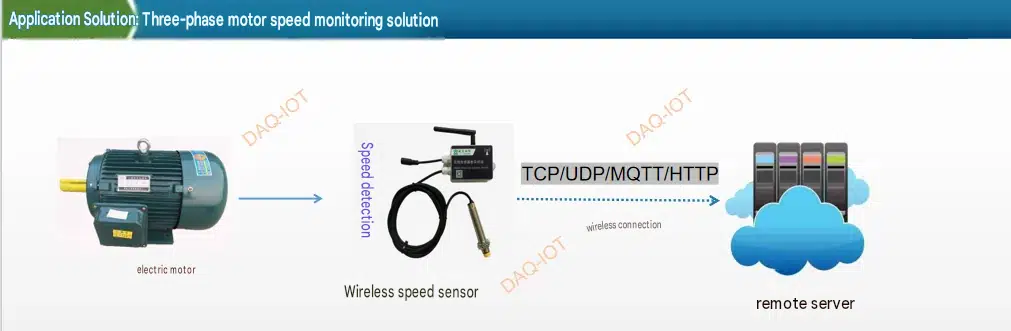
The wireless RPM sensor supports TCP/UDP/HTTP/MQTT protocols and connects easily to IoT platforms for efficient remote monitoring.
In most deployed projects, MQTT is the protocol of choice. MQTT is designed for low-bandwidth, unstable networks and keeps data transmission stable and reliable, which suits industrial sites well. The sensor publishes speed data to a designated topic, and the IoT platform subscribes to that data in real time, so users see equipment status as soon as it changes.
Users can define their own MQTT topics and data formats and integrate easily with other systems to meet varied monitoring needs.
Over MQTT, the sensor connects to a wide range of IoT platforms and monitoring systems, and users can view data from a phone, laptop or tablet at any time.
4. Value Delivered
Higher production efficiency. Real-time speed monitoring lets users catch equipment anomalies early and avoid stoppages caused by failure.
Lower maintenance cost. The sensor supports predictive maintenance: potential problems are found in advance, reducing equipment damage and repair cost.
Remote management, less manpower. With wireless communication and MQTT, no one needs to be on site to monitor running status, which saves a significant amount of labor.
Data-driven decisions. Analysis of historical data helps users optimize operating parameters, build more scientific maintenance plans and raise the level of equipment management.
5. Summary
With real-time measurement, wireless transmission and remote monitoring, the wireless RPM sensor has become an indispensable tool in the industrial internet of things. Whether the application is industrial production, wind power or oil and chemical processing, it delivers accurate speed data and supports efficient equipment management and intelligent O&M. MQTT support lets the sensor connect easily to IoT platforms and gives users a simpler, faster remote monitoring experience.
In an era of intelligent manufacturing, the wireless RPM sensor is a practical aid for raising production efficiency and lowering operating cost as enterprises move toward an intelligent future.