
How Do You Monitor Industrial RPM Wirelessly and Feed It into an MQTT Platform?
In industrial production, rotating machinery — motors, gearboxes, pumps, fans — is the core of the operation, and whether its speed stays stable directly affects production efficiency and equipment safety. Traditional speed monitoring relies on manual rounds: inefficient, unable to raise alarms in real time, and prone to failures caused by abnormal speed going unnoticed. This article describes a complete online RPM monitoring solution built on wireless RPM sensors and the MQTT protocol. It needs no complex cabling, delivers real-time acquisition, remote viewing and exception alarms, and integrates with an IoT platform out of the box — a practical reference for intelligent management of rotating equipment.
1. Core device: what the wireless RPM sensor offers
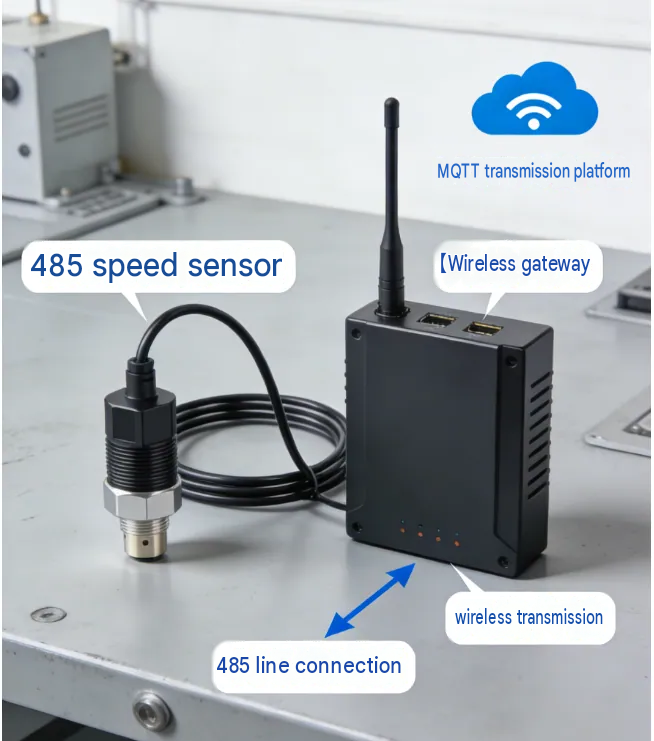
The sensor used here, the SC-GP-RPM4G, is designed specifically for monitoring rotating industrial equipment. It suits a wide range of plant environments and supports wireless transmission and multi-protocol integration. Its key capabilities are:
(1) Accurate real-time speed measurement
The sensor responds quickly to changes in rotational speed and accurately captures the speed of motors, gearboxes, fans, pumps and compressors. The data is timely and precise enough to reproduce the equipment’s actual speed profile, giving a reliable basis for judging its condition.
(2) Multiple wireless transmission options
The sensor supports 4G, WiFi and LoRa, and can also work over a wired Ethernet connection. It adapts to whatever network is available on site, so speed data can be sent to a remote monitoring system or an IoT platform without complex cabling and without staff having to stay on site.
(3) Remote monitoring and automatic alarms
The sensor uploads data to an IoT platform in real time, where users set upper and lower speed thresholds themselves. When the speed leaves the configured range the system raises an alarm and notifies the responsible staff by SMS, email or app push, so faults are found and handled early and equipment damage or production interruption is avoided.
(4) Fits many equipment types and scenarios
The sensor handles high-speed motors as readily as slow-running gearboxes and other rotating machinery. Configuration can be customized, and a standard or explosion-proof version can be selected to match the site, covering the speed monitoring needs of different industrial settings.
(5) Low power, high reliability
Built to industrial grade, the sensor tolerates the temperature, humidity and electromagnetic conditions found on plant floors. It consumes little power and runs stably for long uninterrupted periods, which reduces maintenance frequency.
2. Where the wireless RPM sensor is used
Thanks to its characteristics, this monitoring approach fits virtually any industrial site with rotating equipment. The main scenarios are:
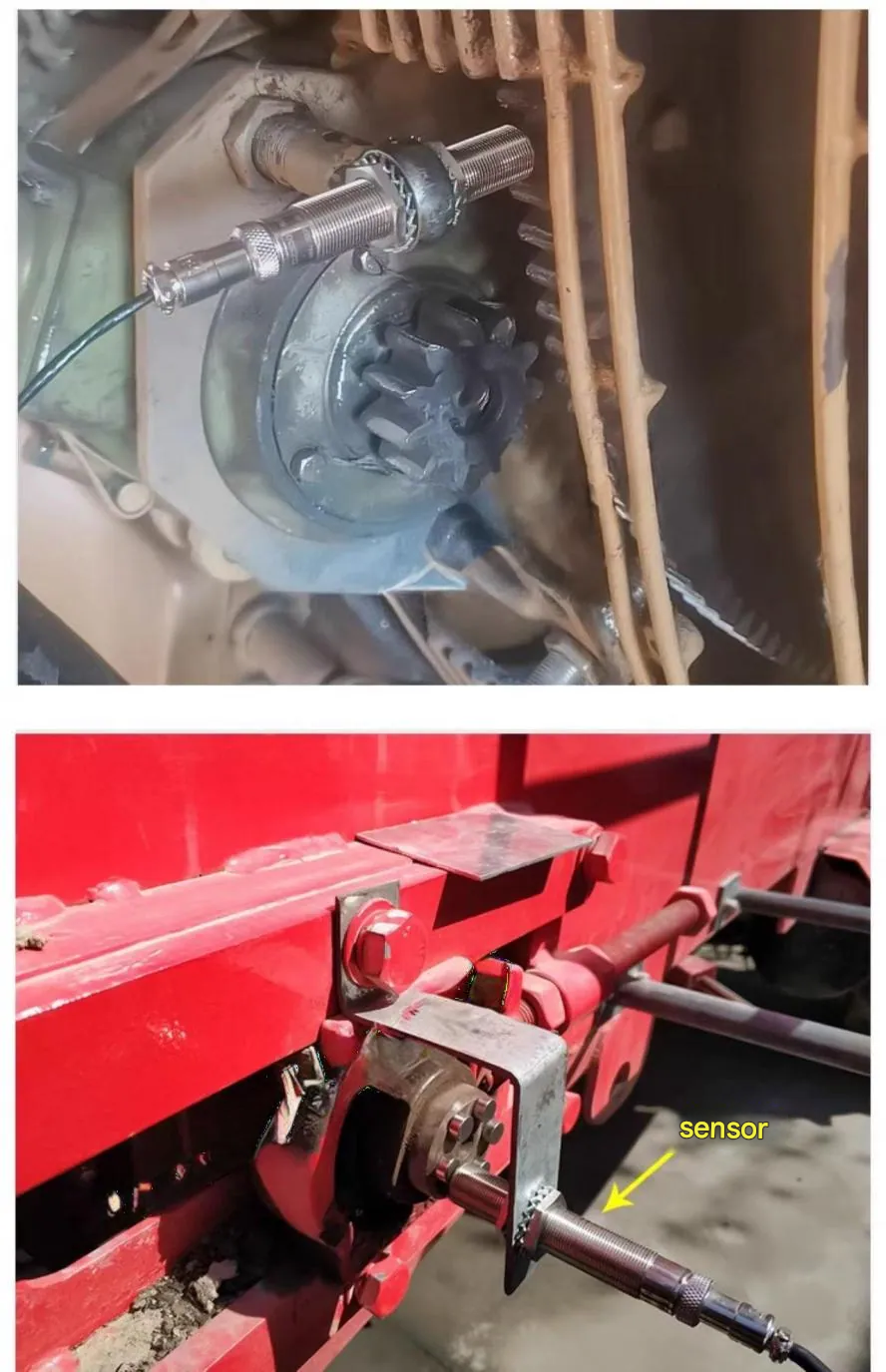
(1) Drive equipment on production lines
Motors are the main drive on any production line. Fitting a wireless RPM sensor to a motor makes speed changes visible in real time, so sudden increases, drops or standstills are caught immediately and a motor fault does not bring the whole line to a halt.
(2) Fans in wind farms
The speed of a wind turbine directly determines generating efficiency. The sensor tracks the speed of the rotor blades and main shaft in real time; O&M staff can use the data to optimize operating parameters and raise output, and to spot abnormal speed early and extend equipment life.
(3) Pumps and compressors in oil and petrochemical plants
In oil refining and chemical production the speed stability of pumps and compressors is directly tied to process safety. The sensor monitors their speed continuously so they stay within rated range, safeguarding process stability and safety.
(4) Maintenance of mechanical equipment
For key components such as gearboxes and bearings, changes in speed data help maintenance staff detect gear wear, poor meshing or bearing seizure early, enabling predictive maintenance and reducing unplanned breakdowns.
(5) General rotating equipment across mining and process plants
The sensor suits the fans, conveyors and mixers found in cement plants, steel mills and pharmaceutical factories, bringing all types of rotating equipment under one unified speed monitoring regime.
3. Implementation essentials: MQTT integration and data transmission
The wireless RPM sensor supports mainstream protocols including TCP, UDP, HTTP and MQTT. Because MQTT copes well with the low bandwidth and unstable networks typical of plant floors, it is the preferred protocol for speed monitoring. The integration essentials are:
(1) Why MQTT
MQTT was designed for IoT device data transfer. It uses little bandwidth and transmits reliably, so speed data still arrives intact even where the on-site network signal is poor — no data loss, no excessive latency. It fits the realities of industrial sites closely.
(2) Integration steps
Sensor configuration: technicians configure the wireless RPM sensor for the site, select MQTT as the transport protocol, and enter the platform address, port and other basic settings;
Platform subscription: the sensor publishes speed data to the designated MQTT topic under the configured rules, and the IoT platform subscribes to that topic to receive the data in real time;
Custom data format: users can define the MQTT payload format to suit their own monitoring needs, and integrate with the company’s own management systems or third-party IoT platforms.
(3) Viewing data from any device
Once integration is complete, speed data synchronizes to the IoT platform in real time. Users can sign in from a PC, phone or tablet to see live speed and historical data wherever they are, with no need to visit the equipment.
4. Overall implementation process
(1) Site survey
Record the type and model of each rotating machine, confirm mounting positions and operating conditions, and decide between the standard and explosion-proof sensor;
Test the network signal strength on site and choose 4G, WiFi or LoRa accordingly, preparing the necessary accessories in advance;
Confirm the power supply available at each device and plan sensor mounting and power, making sure nothing interferes with existing equipment.
(2) On-site sensor installation
The sensor is designed for quick mounting. Fix the probe at the monitoring point on the rotating machine according to the equipment type, making sure it aligns with the rotating part so the readings are unbiased;
Complete the power connection and check that the mounting is secure, so vibration does not shift the sensor;
Commission the wireless signal and confirm transmission is stable; add a signal booster accessory where coverage is weak.
(3) Protocol integration and platform configuration
Technicians configure the sensor’s MQTT parameters remotely and connect it to the designated IoT platform;
Add the device on the platform, subscribe to the data topic, test the upload and confirm speed data updates in real time;
Set upper and lower alarm thresholds according to the equipment’s operating standard and configure how notifications are sent (SMS, email, app push and so on).
(4) Trial run and tuning
After installation and integration, run the system for 72 hours and check measurement accuracy, wireless stability and platform alarming;
Fine-tune sensor position and platform parameters based on the trial run so the monitoring system runs reliably.
5. Value and advantages
(1) Core value
Higher production efficiency: real-time speed monitoring catches abnormal speed and raises alarms immediately, preventing equipment faults from stopping production;
Lower maintenance cost: trends in speed data predict potential faults, enabling predictive maintenance, cutting repair costs from sudden failures and extending equipment life;
Lower labor cost: no manual rounds are needed — staff see the speed status of every rotating machine remotely from any device, greatly reducing inspection effort;
Data-driven management: the platform stores speed history automatically and supports queries and trend analysis, so users can optimize operating parameters and plan maintenance on evidence.
(2) Solution advantages
Easy to install: wireless transmission means no on-site cabling, and the quick-mount design keeps installation time per machine short, without disrupting production;
Highly adaptable: supports many types of rotating equipment and several wireless bearers, integrates with all common IoT platforms, and can be customized for the site;
Stable operation: industrial-grade design suits harsh plant environments, and MQTT keeps transmission reliable, with no data loss even on a poor network;
Simple to use: the platform interface is clean and configuration, threshold setting and data queries are easy to grasp — staff need no specialist IoT knowledge.
6. Ongoing O&M and points to note
(1) Routine remote O&M
Check sensor online status and data transmission regularly on the IoT platform, catch offline sensors and abnormal data early, and troubleshoot basic faults remotely;
Adjust alarm thresholds as operating conditions change so that alarms remain meaningful.
(2) Periodic on-site checks
Inspect the sensors on site once a quarter, focusing on the security of the probe and mounting bracket, and clean dust and oil from the sensor surface so measurement is not affected;
Check the power supply and wireless accessories and replace aging parts promptly to keep the system running.
(3) Points to note
Installation and commissioning must be carried out by qualified technicians; in hazardous areas use the dedicated explosion-proof version and follow site safety rules strictly;
Before integrating with the company’s own systems or a third-party platform, confirm the protocols that platform supports and have technicians complete the configuration so data transfers correctly;
Manage platform accounts and passwords carefully and assign permissions according to each person’s role to prevent accidental changes to data.
A final note
Sensor selection and mounting positions must be decided against the actual operating conditions of the rotating equipment on site. We recommend a thorough site survey and a solution designed and implemented by a professional team, so that the RPM monitoring system achieves the accuracy and stability it is capable of and delivers the full value of intelligent monitoring.