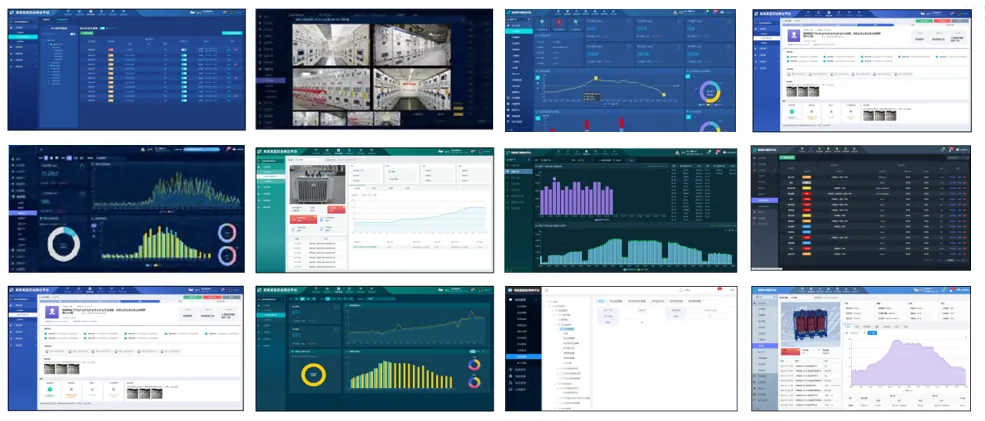
| [Shanghai Daq IoT Technology Co., Ltd.]
| PV O&M Management Platform |
|---|
| Version: V 1.1 |
System overview
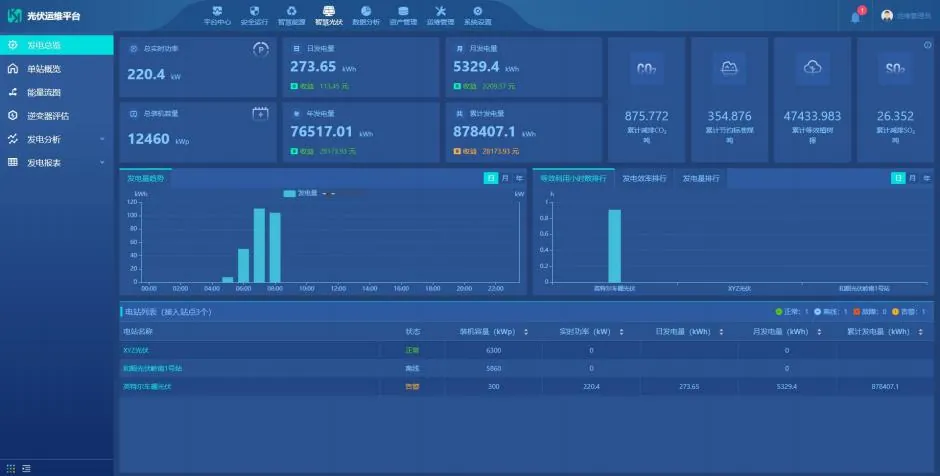
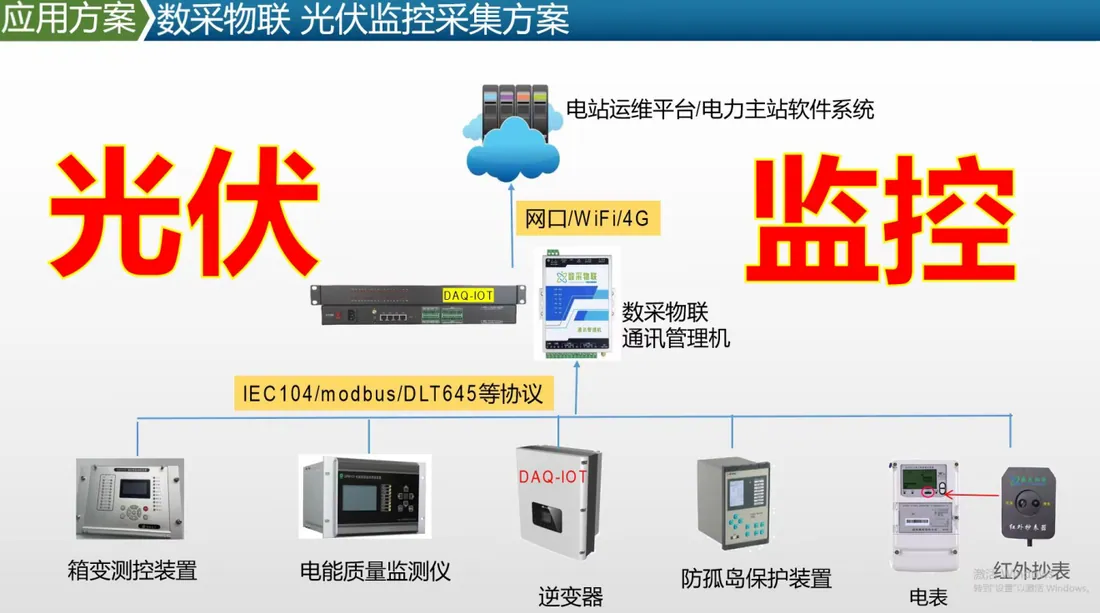
The Daq IoT PV O&M management platform combines data acquisition, data statistics, intelligent alerts and O&M management in one system. It helps PV plants raise generation efficiency, helps O&M companies improve efficiency and management while cutting O&M costs, and so reaches the overall goal of better economic returns. Smart gateways collect operating data and status from inverters, weather stations, integrated measurement and control devices and other equipment on site, enabling real-time online monitoring and diagnosis of the plant.
Application scenarios
Monitoring and O&M management of commercial and industrial distributed PV plants
Monitoring and O&M of centralized PV sites
Residential PV and similar applications
Function overview
| No. | Module | Sub-function | Description |
|---|---|---|---|
| 1 | System overview | Real-time data monitoring | Shows key data of the PV plant in real time: generation, power, voltage, current, frequency and temperature. |
| 1 | System overview | Plant map | Shows the location, status (normal, fault, under maintenance) and basic information of all plants on a map. |
| 1 | System overview | Alarm summary | Consolidates current alarms from all plants, including severity (critical, major, general), type and time. |
| 1 | System overview | Weather information | Integrates weather forecasts and shows conditions at the plant location (temperature, wind speed, irradiance, etc.). |
| 2 | Device management | Inverter management | Manages inverter basic information (model, serial number, installation date), status (running, stopped, fault), fault records and maintenance history. |
| 2 | Device management | Module management | Manages PV module basic information (model, installation position, tilt angle), status (normal, degraded, damaged), fault records and cleaning records. |
| 2 | Device management | Combiner box management | Manages combiner box basic information (model, installation position), status (normal, fault), current and voltage data, and fault records. |
| 2 | Device management | Meter management | Manages meter basic information (model, installation position), status (normal, fault), energy data and fault records. The metering relationships of plant meters are configured here, defining how meters relate to plants and users. |
| 2 | Device management | Transformer management | Manages transformer basic information (model, capacity), status (normal, overloaded, fault), temperature data and fault records. |
| 2 | Device management | Environmental monitoring device management | Manages basic information, status and data records of environmental monitoring devices (pyranometers, anemometers, temperature sensors). |
| 2 | Device management | Ancillary equipment management | Manages basic information, status and data records of power quality monitors, anti-islanding devices and similar equipment. |
| 3 | Data monitoring | Real-time data | Real-time monitoring of plant generation, power, voltage, current, frequency, temperature and irradiance, with chart display. |
(The table is longer; only the first 12 rows are shown here.)
Key functions
1. Online device monitoring
Inverters, combiner boxes, grid-connection equipment and weather stations are monitored in real time, with remote monitoring and remote meter reading. When a hidden fault is detected, O&M staff are notified promptly by SMS or phone call.
2. Online and offline O&M
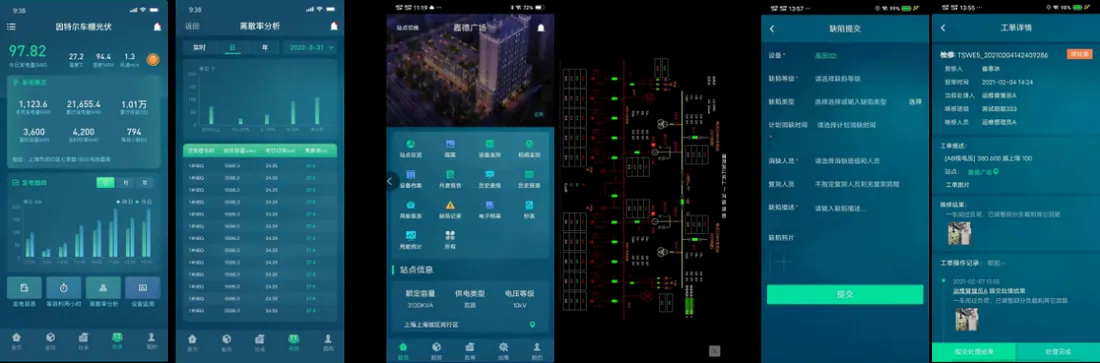
Complete O&M process management on cloud and mobile, with automatic flow of data and tasks, makes O&M standardized and efficient — raising O&M efficiency and lowering O&M cost.
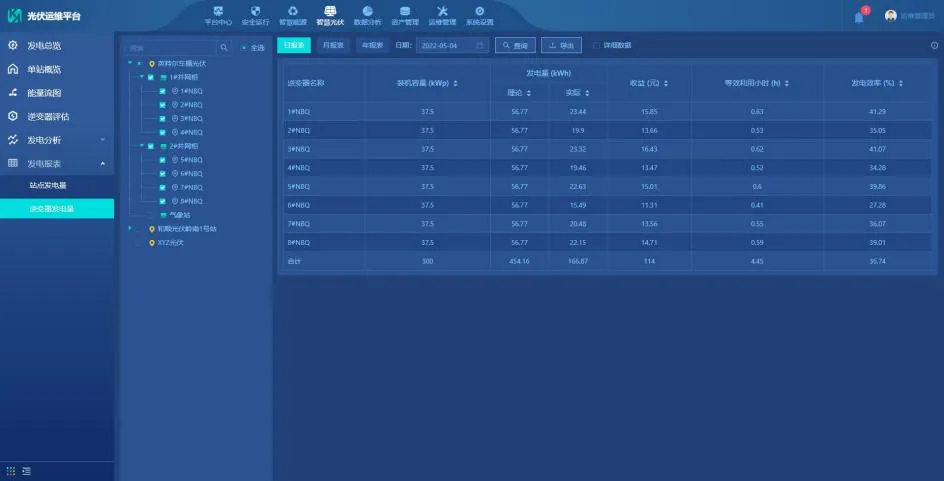
3. Generation reports
Built-in generation analysis reports across multiple dimensions; custom reports are also supported to meet the needs of different sites.
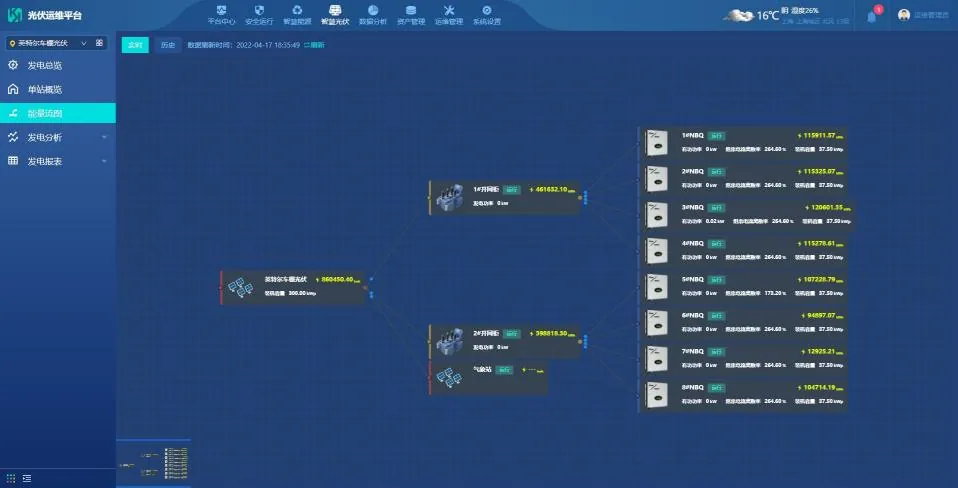
4. Energy flow diagram
Presents the physical layout of equipment at every level of a PV site, together with the generation and loss information at each equipment node.
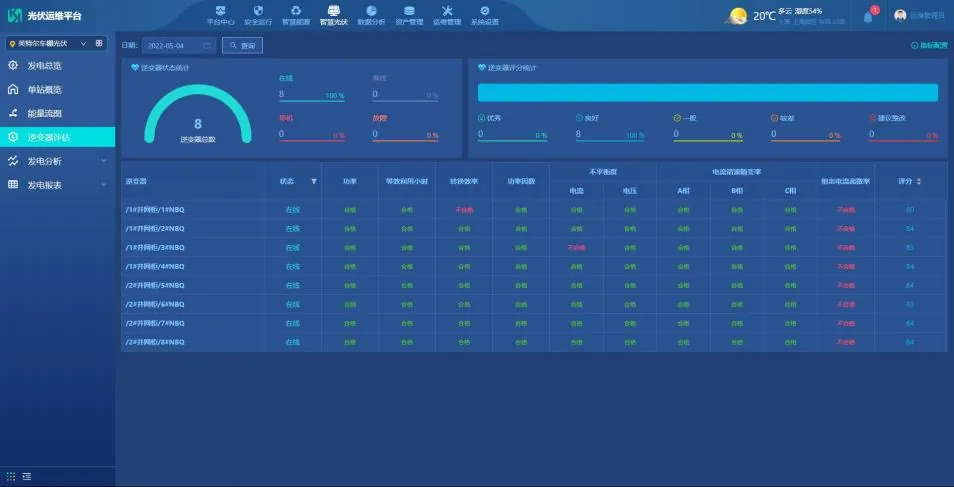
5. Inverter health assessment
Comprehensive health analysis of inverters from equivalent utilization hours, power factor, conversion efficiency, string dispersion rate and other aspects.
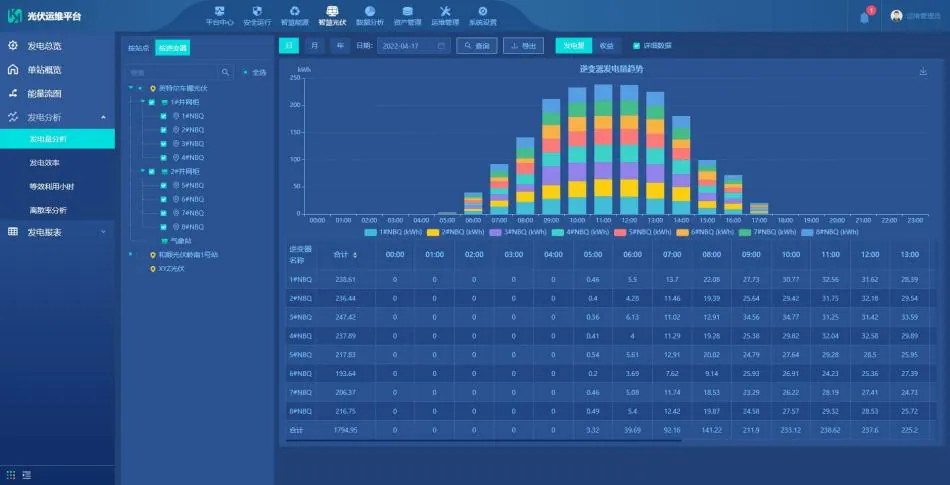
6. Generation analysis
Analysis of generation, generation efficiency, equivalent utilization hours and current (power) dispersion rate for a site or an inverter. Problems are found in time and generation efficiency improves.
7. PV data dashboards
Multi-site PV dashboards and single-site dashboards are provided; the dashboard layout can also be defined to suit the situation.
Key technologies
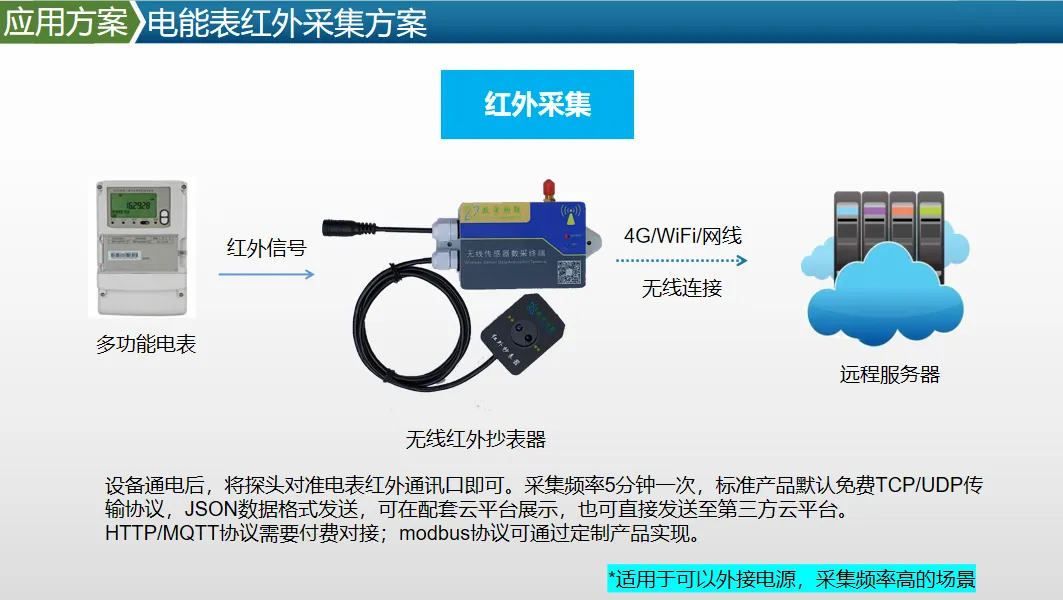
PV meter data acquisition
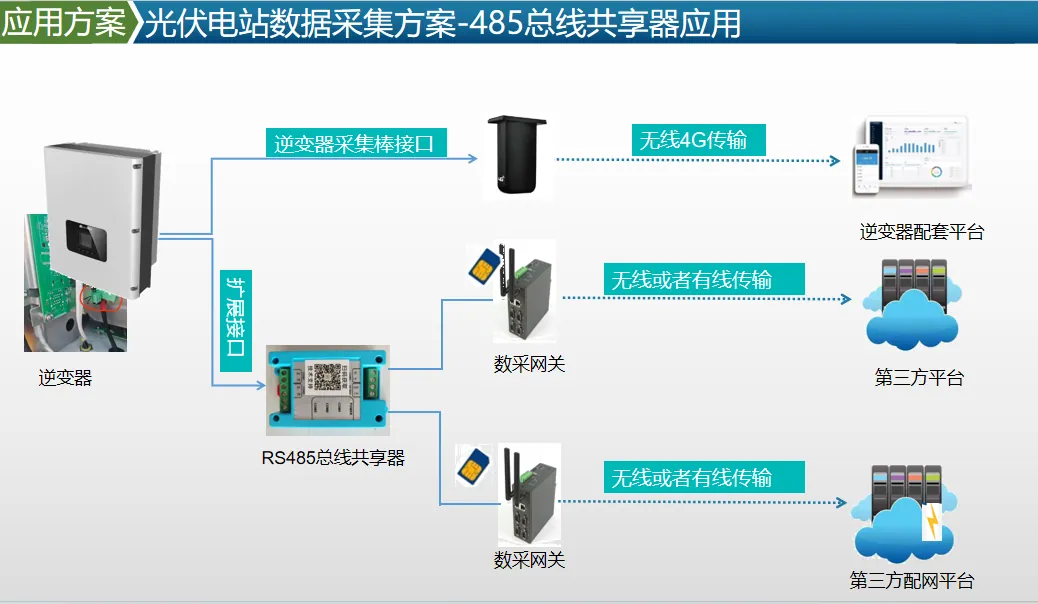
Inverter data acquisition
PV combiner box
Power quality monitors, anti-islanding devices and other ancillary equipment for PV plants.
Customizable interface
The platform offers interface themes in several styles that can be switched dynamically to meet individual user requirements.