
(HJ212 protocol, connecting to the provincial pollution source automatic monitoring platform)
1. Solution Overview
1.1 Policy Background and Rationale
China’s ecological and environmental protection system is now upgrading its off-site supervision system for automatic pollution source monitoring nationwide. The Ministry of Ecology and Environment issued the Work Plan for Reform of Self-Monitoring Supervision and Management and released the new HJ212-2025 Technical Requirements for Data Transmission of Automatic Pollutant Monitoring and Supervision Systems. The new standard brings power-condition monitoring of production facilities and pollution control facilities into the scope of statutory automatic pollution source supervision. It requires simultaneous upload of emission monitoring data, equipment operating parameters and power consumption data of treatment facilities, and builds a dynamic control system centered on power operating conditions. The target is to crack down on violations such as leaving treatment facilities idle, secretly running production lines to discharge untreated waste, and falsifying online monitoring data.
Provincial and municipal ecology and environment departments have issued dedicated notices on upgrading automatic monitoring and supervision facilities at pollutant-discharging facilities. The requirements are binding and consistent: standardized construction of automatic monitoring station rooms, networked video at discharge points, installation of power and energy monitoring devices on production and treatment facilities, and matching intelligent data transmission terminals. All monitoring data must follow the HJ212 standard and connect to the unified provincial automatic pollution source monitoring platform. Devices are registered one by one under a “one device, one code” scheme, and power load data is used to corroborate the authenticity of emission data, closing the blind spots left by conventional water-quality or exhaust-gas-only online monitoring.
Manual on-site inspection cannot deliver full coverage, is slow, costly in manpower, and difficult to use for evidence collection. Many discharging enterprises run production lines at full load while their pollution control equipment sits idle or spins without load. Concentration monitoring alone cannot show the real production and treatment status. Under this binding policy, online monitoring of power use and energy consumption of pollution control equipment has become a mandatory upgrade for pollutant-discharging facilities across China. It is also the core technical means for ecology and environment departments to implement the pollution source monitoring reform of the 15th Five-Year Plan period and complete their off-site law enforcement system.
This plan focuses only on the core needs of power acquisition, energy statistics and operating-condition identification. It is built on the multi-circuit wireless current and energy monitoring sensor (SC-GP-EM4G series) from Shanghai Daq IoT Technology Co., Ltd., and aligns strictly with national environmental standards, provincial upgrade policies and the HJ212-2025 data transmission specification. The result is a nationwide applicable monitoring system dedicated to power and energy monitoring. The plan excludes electronic access control, video monitoring and other extended functions that this device cannot deliver. It concentrates on full-dimensional acquisition and storage of plant-wide, production equipment and treatment facility power data, plus direct transmission to the provincial environmental platform over HJ212. A batch deployment case at wastewater plants in Xinxiang, Henan is included as practical support. The plan serves three purposes at once: compliance upgrades for discharging enterprises, intelligent verification for environmental regulators, and lead generation for environmental engineering contractors running batch projects. It carries no regional restriction and adapts to the provincial automatic pollution source monitoring platform of any province or city in China.
1.2 Scope of Application
Key wastewater, air and groundwater pollutant-discharging facilities listed in the annual key environmental supervision roster.
Enterprises under key-management pollutant discharge permits that specify automatic monitoring and power-condition monitoring requirements.
Pollution-generating production enterprises such as municipal wastewater treatment plants, chemical plants, non-ferrous metal smelters, coating shops, printing houses and food processing plants.
Existing facilities that already have automatic monitoring installed and need an upgrade, and new enterprises building automatic monitoring systems.
Unified provincial and municipal automatic pollution source monitoring upgrade projects, which connect seamlessly to the localized version of each province’s “Automatic Monitoring and Basic Database System for Key Pollutant-Discharging Facilities (Guofa Platform V5.0)”.
1.3 Core Objectives
Policy compliance. Meet the technical clauses on power-condition monitoring in the provincial automatic monitoring facility upgrade programs. Complete device installation and energy data networking on schedule, pass on-site acceptance by the environmental authority, and avoid administrative penalties for missing power monitoring on treatment facilities, missing data or non-compliant transmission.
Operating-condition supervision. Continuously acquire current, voltage, real-time power, cumulative energy consumption and power factor from the plant main incoming line, the main production facilities and the complete set of pollution control facilities. Load curves separate the start/stop status of production and treatment equipment at a glance, and identify violations such as “production running, treatment stopped”.
Platform integration. SC-GP-EM4G supports the HJ212-2025 transmission protocol, one-device-one-code authentication and 4G wireless connection to the provincial environmental monitoring platform. Power data is reported in real time within 5 minutes, and the regulator can retrieve historical energy records remotely.
Lower cost of deployment. Devices use non-intrusive split-core current transformers, so no large-scale power shutdown or rewiring is needed; a qualified electrician can do the installation. Remote parameter configuration and firmware upgrades cut both upgrade and long-term O&M labor costs.
Nationwide applicability. The monitoring hardware, transmission protocol and point layout logic are uniform across the country. They suit small and medium-sized discharging enterprises and batch upgrade projects at township wastewater stations, letting environmental engineering contractors take projects across regions.
2. Compliance Basis for the Solution Design
2.1 National Top-Level Policies and Technical Standards
Work Plan for Reform of Self-Monitoring Supervision and Management (Ministry of Ecology and Environment). Requires off-site dynamic supervision of pollution sources based on power-condition monitoring, and strengthens the means of corroborating emission data.
HJ212-2025 Technical Requirements for Data Transmission of Automatic Pollutant Monitoring and Supervision Systems. Adds coding rules for power and energy monitoring devices, defines the energy acquisition terminal as the field acquisition unit, specifies the real-time upload rules for current, voltage, power and cumulative energy consumption, requires one-device-one-code authentication through a unique MN device code, and caps data transmission delay at 5 minutes.
HJ353, HJ354, HJ75 and HJ76 technical specifications for automatic water and exhaust-gas monitoring. Require supporting power and energy monitoring data to corroborate the validity of online monitoring data.
Power acquisition specifications. Low-voltage AC energy acquisition and split-core current transformer installation safety rules, ensuring safe site work and accurate metering data.
2.2 Common Requirements in Provincial and Municipal Upgrade Policies
The pollutant-discharging facility is the responsible party for building and maintaining power-condition monitoring facilities, and must complete installation of power monitoring devices and connection to the provincial environmental platform within the prescribed time limit.
Monitoring points must cover the plant main power circuit, all main production facilities and all wastewater/exhaust-gas treatment facilities. Monitoring circuits are laid out strictly according to the “production–treatment–discharge” correspondence defined in the pollutant discharge permit.
All power and energy monitoring data must be transmitted to the provincial Guofa monitoring platform following the HJ212 standard. Inspectors can view data in real time and retrieve historical energy data for comprehensive assessment.
Purpose-built energy monitoring devices with multi-circuit simultaneous acquisition, 4G wireless transmission, local data caching and remote O&M are encouraged. A one-device-one-code registration system must be established to prevent unauthorized modification of monitoring devices and falsification of data.
2.3 Reference from Deployed Projects
The environmental equipment energy monitoring project in Xinxiang, Henan serves as the reference. More than 40 township wastewater treatment stations there deployed wireless energy monitors of the same Daq IoT series, collecting energy data only for wastewater treatment blowers, dosing equipment and total plant power, with stable data delivery to the local environmental supervision platform. Using long-term power load curves, regulators can quickly identify violations such as station shutdown or intermittent treatment. The project produced a standardized end-to-end procedure covering site survey, device installation, HJ212 platform joint commissioning and acceptance, and provides mature practical experience for hardware selection, point layout, installation, commissioning and platform integration in this plan.
3. Overall System Architecture
The system is built in three layers, all designed around power acquisition, energy statistics and data transmission to the environmental platform. The architecture matches the field communication model of the HJ212-2025 standard.
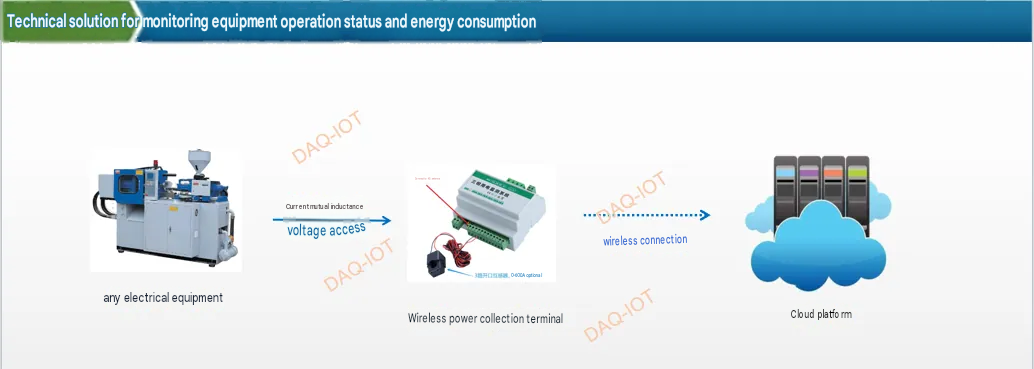
3.1 Layer 1: Field Acquisition Terminal Layer — Daq IoT SC-GP-EM4G Multi-Circuit Wireless Energy Monitor
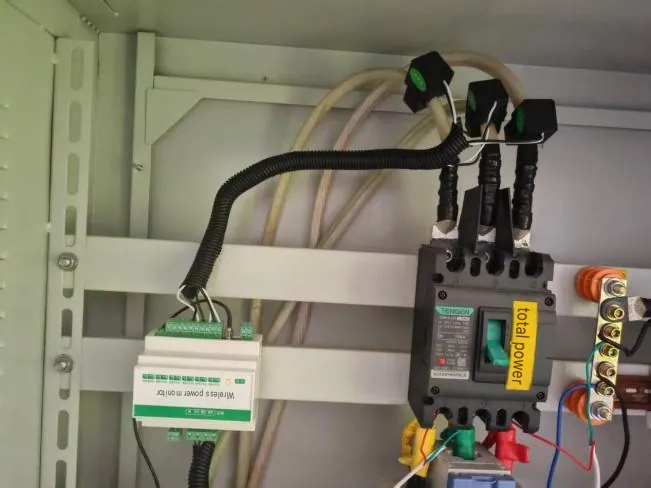
SC-GP-EM4G is the field acquisition hardware of this plan. It handles multi-circuit power and energy data acquisition across the plant. With split-core current transformers it delivers non-intrusive circuit monitoring without power shutdown and without disturbing the enterprise’s normal production supply circuits.
3.1.1 Core Hardware Specifications (Matching Environmental Power Monitoring Requirements)
Acquisition channels. A single device supports 6 independent AC current and voltage acquisition circuits, monitoring plant total power, several production lines and several wastewater/exhaust-gas treatment facilities at the same time. Multiple devices can be expanded in parallel over RS485 for large discharging enterprises with many monitoring points.
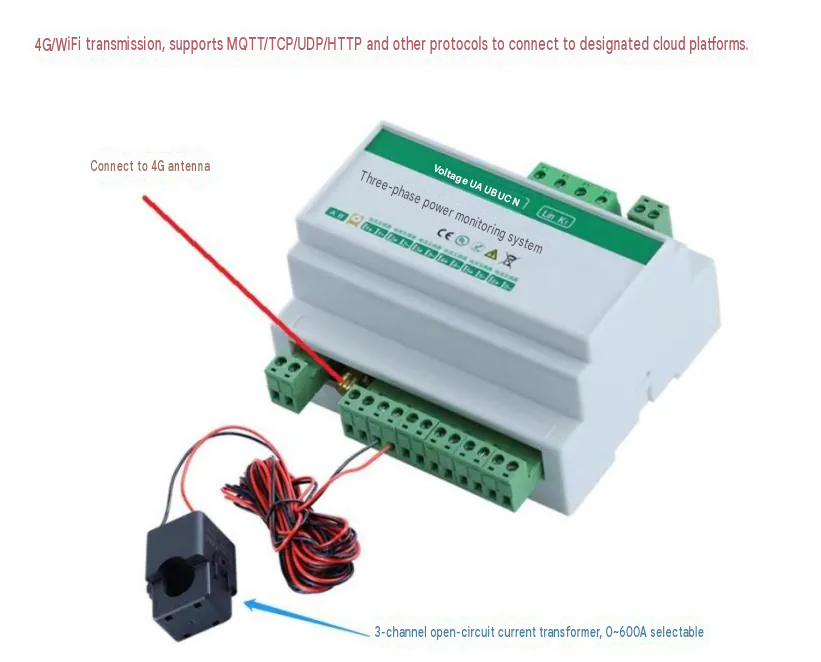
Measuring range and accuracy. Voltage range 110–250 V AC, current 0–120 A (custom high-current transformers supported); voltage accuracy ±1 V, current accuracy ±0.1 A, power accuracy ±1 W. Metering accuracy meets the requirements of environmental energy ledger verification.
Power supply. 220 V AC mains supply, whole-device power consumption ≤3 W; can be paired with the station room UPS and regulated power supply for uninterrupted operation.
Communication interfaces. Standard RS485 Modbus and 4G full-network wireless transmission, for local energy data exchange and upload to the environmental platform.
Environmental suitability. Operating temperature range −40 °C to 80 °C, dust-proof and moisture-proof. Deployable in indoor monitoring station rooms, outdoor low-voltage distribution cabinets and underground wastewater distribution rooms.
Local storage. Can be customized to cache no fewer than 100 device operation logs and long-term energy consumption data locally. Data is cached automatically during network outage and re-uploaded in batches once the network returns, keeping provincial platform energy data complete.
Device traceability. Each device carries a unique hardware ID that maps to the HJ212 MN device code, meeting the environmental “one device, one code” registration requirement. Device replacement or relocation requires re-certification on the platform.
3.1.2 Core Terminal Functions (Focused on Power and Energy Monitoring)
Simultaneous multi-circuit power acquisition. Acquires three-phase voltage, real-time current, active/reactive power, power factor, cumulative energy consumption and equipment runtime for each monitored circuit on a time-shared basis. It distinguishes production load from treatment load automatically and stores each circuit’s energy data independently.
Non-intrusive, non-destructive installation. Supplied with split-core current transformers, so existing supply cables need no cutting or modification. Installation is simple, shutdown time is short, and the work complies with low-voltage electrical safety rules.
Local energy anomaly flagging. Built-in load threshold logic: when a production line circuit shows continuous power draw while the matching treatment facility power approaches zero, the device keeps an abnormal-condition record locally and uploads it to the provincial environmental platform at the same time.
Remote O&M and configuration. Supports 4G remote changes to reporting interval, load alarm thresholds and platform connection parameters, and supports whole-device FOTA upgrades, with no need for a technician to visit the site.
Pure energy data transmission. The terminal packages and uploads only power-related messages such as voltage, current, power, energy and device online status. The system architecture stays simple and the probability of transmission failure is reduced.
3.2 Layer 2: Data Transmission Layer — Dedicated HJ212-2025 Transmission Link
The application interaction layer includes a complete HJ212-2025 protocol parsing module. No additional intermediate data acquisition unit is required; the terminal communicates directly with the host system of the provincial environmental platform. All transmission rules follow the provincial upgrade documents strictly, and only energy consumption data is transmitted.
1. Basic Communication Specifications
Transmission link. 4G wireless TCP/IP transmission, supporting TCP, UDP and MQTT. Upstream power messages follow HJ212-2025 coding rules strictly.
Data security. Built-in SM4 symmetric encryption; energy messages are transmitted encrypted to prevent interception and tampering, meeting environmental network security supervision requirements.
Device network authentication. The MN code is generated from the unique hardware ID, and one-device-one-code registration is completed in the “new networked enterprise device certification” module of the provincial Guofa Platform V5.0.
Reporting timeliness. Real-time power-condition data is delivered to the provincial monitoring center within 5 minutes. Alarm events such as device offline and load anomalies are uploaded immediately, meeting the regulator’s need for real-time access.
2. Data Content Transmitted
Basic power parameters. Real-time voltage, current, instantaneous active/reactive power and power factor for each circuit.
Energy statistics parameters. Daily and hourly cumulative energy consumption per circuit, and cumulative equipment runtime.
Device status parameters. Acquisition terminal online/offline status, current transformer open-circuit fault, supply loss alarm and anti-tamper alarm.
- Offline fallback guarantee. The terminal caches long-term historical energy data locally; the caching period meets the environmental requirement of retaining data for at least 3 months. Missing energy records are automatically re-uploaded in segments once the network returns, eliminating gaps on the platform and preventing penalties for missing data.
3.3 Layer 3: Provincial Environmental Supervision Platform Layer (Localized Guofa Platform V5.0)
All power and energy data uploaded by the terminal goes directly into the provincial unified “Automatic Monitoring and Basic Database System for Key Pollutant-Discharging Facilities” V5.0. The platform provides a full set of supervision functions for energy data:
Real-time energy view. Inspectors pull up real-time power curves and instantaneous load for all monitored circuits online, and view production equipment and treatment facility power status separately.
Intelligent operating-condition assessment. The platform automatically compares energy data of production lines and their matching treatment facilities over the same period, flags violations such as “production running, treatment stopped” or “treatment equipment idling at low load”, and generates warning records.
Energy data archiving. Raw power and energy data is stored in the cloud for no less than 1 year. Historical ledgers can be exported at any time as valid supporting evidence for on-site enforcement, total emission accounting and self-monitoring verification.
Remote device verification. The platform can issue commands to read the terminal’s local cached energy logs and device parameters, enabling fully online off-site verification with no inspector visit.
Energy report export. Batch export of monthly, quarterly and annual energy consumption statistics reports for enterprises, supporting the routine supervision work of environmental departments.
4. Standardized On-Site Implementation Plan
4.1 Layout Rules for Power Monitoring Points
Monitoring circuits are divided into three standard classes strictly according to the “production–treatment–discharge” correspondence in the pollutant discharge permit. Current transformers are installed only on power equipment. Channels can be added or removed flexibly to match enterprise scale, and the point list is filed with the local ecology and environment bureau.
Plant total power monitoring point. Installed at the main incoming switchgear in the enterprise distribution room to capture total plant energy consumption and determine overall production start/stop status.
Main production facility monitoring points. A separate transformer circuit for each independent production line and each core production machine, capturing real-time power load accurately.
Pollution control facility monitoring points. Wastewater station aeration blowers, dosing pumps and sludge dewatering equipment; exhaust-gas desulfurization and denitrification blowers, VOCs thermal oxidizers, and activated-carbon adsorption blowers — every treatment power device gets its own monitoring circuit. Where an enterprise operates special parallel production equipment, circuits may be combined after on-site survey and approval by the local ecology and environment department.
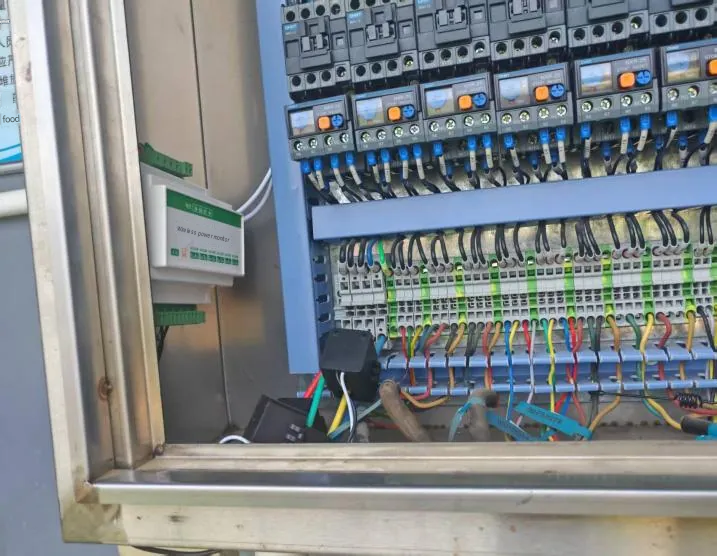
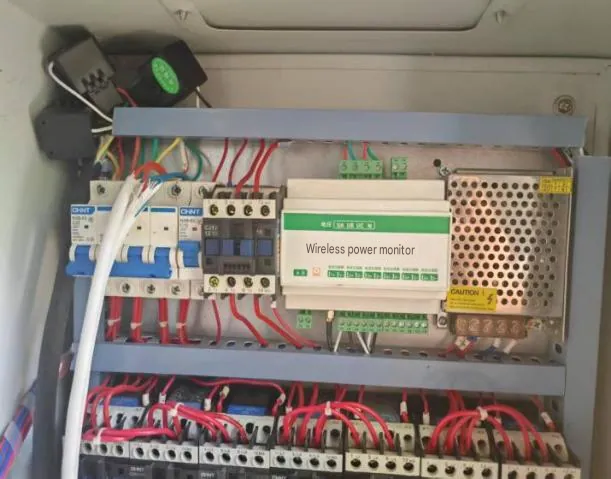
4.2 Supporting Construction of the Monitoring Station Room
The energy monitoring host is deployed centrally in the enterprise’s dedicated automatic monitoring station room. Supporting modifications cover terminal power supply and operating environment:
Power supply guarantee. The terminal is connected to the station room UPS regulated supply, so acquisition and caching of energy data continue after a mains outage and monitoring is not interrupted.
Environmental provisions. The station room is fitted with a heating/cooling air conditioner with auto-restart, grounding and lightning protection, fire extinguishers and ventilation, keeping the monitoring host stable over the long term.
Line protection. Transformer signal cables and the 4G antenna are routed through metal conduit. Underground distribution rooms get an external 4G extension antenna to avoid basement signal dead zones.
Cabinet integration. The energy monitor shares a cabinet with the enterprise’s existing water-quality/exhaust-gas online data acquisition unit. It uploads energy data independently and has no cross-device linkage acquisition function.
4.3 Standardized Construction Process (Reference: Xinxiang Wastewater Energy Monitoring Project)
Pre-work site survey. A licensed electrician surveys the enterprise distribution cabinets, cable cross-sections and equipment rated currents, selects split-core transformers of matching aperture, produces the power monitoring point layout plan and submits it to the ecology and environment department for filing.
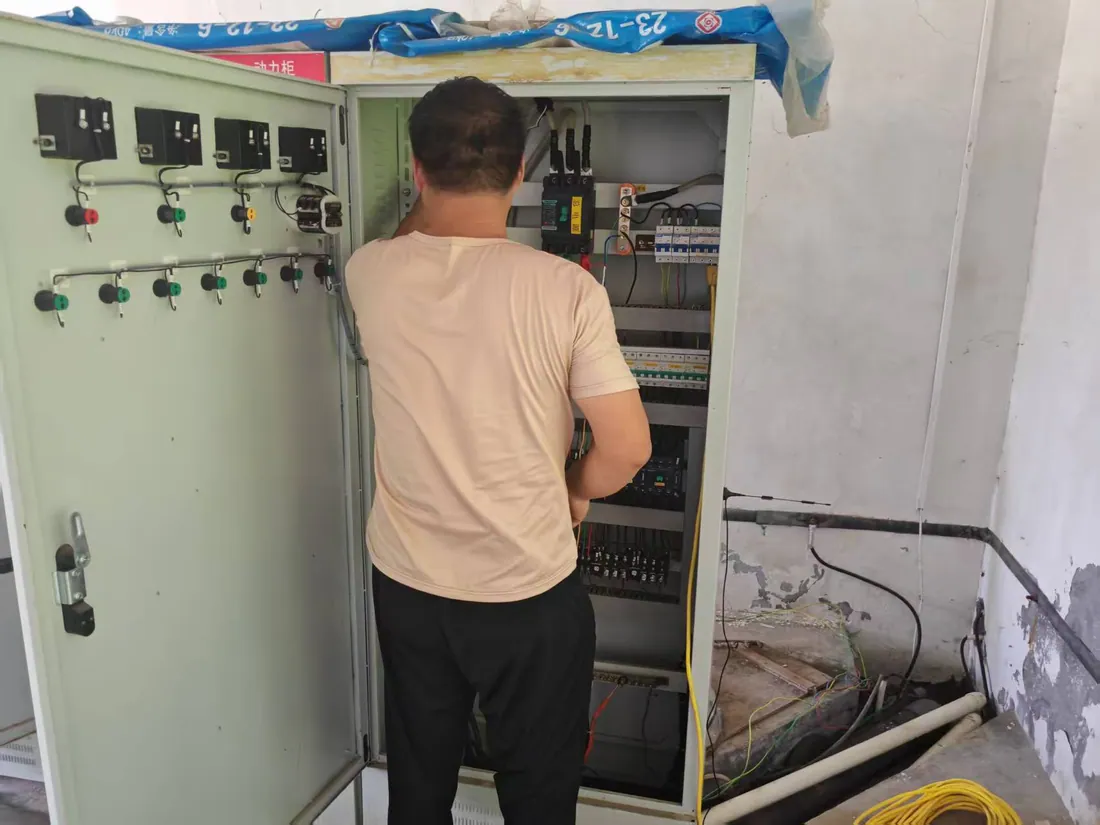
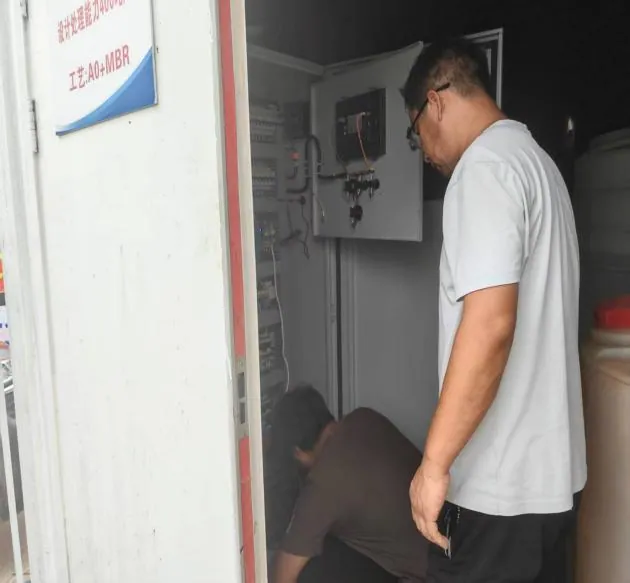
Safe shutdown installation. Disconnect the supply circuit, clamp on the split-core transformers, connect the SC-GP-EM4G voltage terminals to specification, keep RS485 A and B wires distinct and avoid address conflicts on the bus.
4G network and protocol commissioning. Connect the external 4G antenna and test signal strength; configure the provincial environmental platform HJ212 communication parameters, device MN code and energy data reporting interval.
One-device-one-code platform registration. Help the enterprise log in to the device certification module of the provincial Guofa Platform V5.0 and enter the energy monitoring device hardware information to complete network registration.
24-hour joint commissioning and acceptance. Monitor continuously for one working day, verify the completeness of energy curves and alarm records on the provincial platform, issue the power monitoring system installation and commissioning report, and support the environmental department’s on-site acceptance.
After-sales remote O&M. The manufacturer provides 7×12 online technical support, remotely troubleshooting data transmission outages and parameter anomalies; hardware faults are handled by an on-site visit within 48 hours to replace transformers or the acquisition terminal.
5. Core Product Advantages
5.1 Differentiation of the Daq IoT SC-GP-EM4G (Focused on Power and Energy Monitoring, Precisely Matched to Environmental Upgrade Needs)
HJ212 protocol support, no separate environmental data acquisition unit. Most comparable energy acquisition modules on the market support only Modbus and need a third-party environmental data acquisition unit to convert to HJ212 messages, which raises hardware purchase and installation cost. This plan implements the environmental transmission protocol stack in the data interaction layer, so one device handles power acquisition, energy statistics and platform upload. The system keeps only the core power monitoring hardware, with no redundant devices, greatly lowering the upgrade investment for small and medium-sized enterprises.
Six integrated channels, suited to discharging enterprises of any size. One device monitors six independent power loads simultaneously. A small township wastewater plant or micro enterprise can cover all production and treatment facilities with a single unit; large chemical or smelting enterprises can expand by paralleling multiple devices over RS485. One plan fits projects of different scale, making it easy for contractors to take on upgrade work in batches.
Minimal installation work, high efficiency in batch rollout. Split-core transformers need no cable cutting or wide-area shutdown; a licensed electrician can install all points at one enterprise in half a day. The manufacturer provides one-to-one remote parameter commissioning guidance throughout, with no environmental specialist needed on site. This suits fast rollout of batch upgrade projects across provinces and cuts contractors’ on-site labor cost.
Ultra-wide temperature range, deployable nationwide. The operating range covers −40 °C to 80 °C, so data acquisition stays stable in unheated northern station rooms in winter and in exposed southern distribution cabinets in summer. Outdoor deployment needs no extra temperature-controlled enclosure, and there is no north-south adaptation limit: contractors expanding across provinces do not need to change the hardware plan.
Pure energy monitoring positioning, low failure rate, simple O&M. The device focuses only on power and energy acquisition and transmission, reducing communication faults caused by multi-device linkage. It supports remote changes to the reporting interval and remote whole-device upgrades, and resumes energy data transmission automatically after a network outage. Long-term O&M workload is very low, which helps contractors maintain existing customers and keep generating new projects.
5.2 Core Value of the Universal Plan for Lead Generation (for Environmental Contractors, O&M Companies and Discharging Facilities)
Fully compliant, passes environmental acceptance in one go. The plan maps clause by clause to the new national HJ212 standard and to provincial automatic monitoring upgrade documents. Hardware selection, point layout, data transmission and station room provisions are all designed around power and energy monitoring, with no redundant function modules. After the upgrade, enterprises pass on-site environmental acceptance in one go, avoiding rework and penalties. Environmental contractors can use this plan as a standardized bid template for upgrade projects in any region of China.
Works with all provincial environmental platforms, no regional lock-in. The HJ212 protocol is standardized for the Guofa V5.0 pollution source monitoring systems of all provinces. Contractors taking projects across regions do not need to change hardware or redevelop the transmission protocol. One technical plan is reused nationwide, greatly reducing customization and technical integration cost.
Backed by a mature deployment case, stronger in bids. The plan includes the batch energy monitoring case at more than 40 township wastewater stations in Xinxiang, Henan as evidence. Contractors can attach the case material to their bids to raise the win rate. Standardized plan templates, technical disclosure documents and acceptance ledgers are also provided, lowering the technical barrier for partners.
Lower total upgrade cost, strong market competitiveness. The integrated acquisition and transmission terminal replaces the conventional three-part “transformer + acquisition module + environmental data acquisition unit” scheme and keeps only the core power monitoring function. Total cost of hardware purchase, auxiliary materials, installation and later O&M drops by more than 30%. For the many small and medium-sized enterprises and township wastewater treatment plant batch upgrades, this delivers a strong price advantage and supports rapid customer acquisition.
Modular expansion for long-term business growth. The device focuses on power and energy monitoring while reserving an RS485 expansion interface, so water-quality and exhaust-gas online monitoring devices can be connected later on demand to form a combined “emission monitoring + power-condition” solution. Contractors can expand business to customers in phases and sustain lead generation.
6. O&M and Environmental Acceptance Assurance System
6.1 Standardized O&M Services
Remote online O&M. Dedicated 7×12 technical support; remote commissioning of HJ212 platform connection parameters, troubleshooting of energy data transmission outages, and remote device firmware upgrades.
Quarterly online inspection. Each quarter, check the online rate and energy data completeness of all energy monitoring devices in partner projects, and issue an operating-condition and energy monitoring O&M report.
On-site hardware maintenance. If transformers or the acquisition terminal fail, a technician is dispatched to replace them within 48 hours, keeping energy monitoring uninterrupted.
Compliance ledger assistance. Help the enterprise organize power monitoring device installation drawings, platform registration screenshots and monthly energy ledgers, meeting the documentation requirements of routine environmental inspections.
6.2 Complete Acceptance Documentation Package
Site survey drawings of power monitoring point layout, and transformer installation point filing form;
SC-GP-EM4G factory test report;
Screenshot of one-device-one-code registration on the provincial platform, and 24-hour continuous energy data upload log;
On-site wiring records and copies of electrician qualification certificates;
O&M ledger template for the pollution control equipment power and energy monitoring system;
7. Summary
Upgrades of automatic pollution source monitoring facilities are now rolling out across China, and the new HJ212-2025 transmission standard is in force. Power and energy monitoring of production and treatment facilities has moved from an optional extra to a mandatory environmental requirement. This plan concentrates on the three core needs — power acquisition, energy statistics and HJ212 integration with provincial environmental platforms — and builds on the SC-GP-EM4G multi-circuit wireless energy monitor from Shanghai Daq IoT Technology Co., Ltd., aligned strictly with national and provincial environmental policies and technical specifications. The result is a nationwide applicable, simple and low-cost professional environmental energy monitoring system.
The plan serves discharging enterprises needing compliance upgrades, environmental regulators needing intelligent off-site verification, and environmental contractors needing batch lead generation at the same time. Integrated hardware lowers total project investment; standardized construction and remote O&M procedures shorten delivery cycles; and the mature wastewater plant energy monitoring case provides complete practical support. It can be used for bidding, technical engagement and on-site implementation of automatic monitoring upgrade projects for pollutant-discharging facilities in any province or city. The system as a whole targets the supervision pain point of power conditions on production and pollution control equipment, helping local ecology and environment departments complete their intelligent off-site supervision system, pushing discharging facilities to meet their environmental responsibilities, and continuously raising the level of refined pollution source control in each region.