
Full-stack IoT technology for SME digital transformation
Partner: Shanghai Daq IoT Technology Co., Ltd.
Positioning: a technology-promotion solution, focused on IoT architecture, matching products and industry applications, with policy, construction and O&M execution content kept brief.
Guided by the city pilot program for SME digital transformation, small and medium-sized enterprises in the three leading industries — smart electrical and electronic information manufacturing, new material products manufacturing, and green food processing — share common problems: highly heterogeneous equipment, missing data acquisition, loose energy control, and a low level of digitalization in production management. Digital transformation has become the core path to lower cost, higher efficiency, better quality and compliant operation, and industrial IoT is the foundation beneath it — the key support for connecting equipment, data and management end to end.
Shanghai Daq IoT Technology Co., Ltd. has spent years on industrial data acquisition and IoT system development and holds a complete integrated hardware and software product line. Given the reality of SMEs in these three industries — weak foundations, limited budgets, reluctance to stop production for retrofits, and a shortage of specialists — the company provides small, fast, light and precise IoT solutions. The sections below cover the overall IoT architecture, the full product range, and scenario-based applications by industry. Technical routes are designed around actual shop-floor conditions. Every product and solution described is already in mature deployment: no invented functions, no exaggerated claims. The aim is to help local SMEs complete digital upgrades at low cost and low threshold, with digital control across production, equipment, energy and environment.
1. Core approach and overall IoT architecture
1.1 Core design approach
The design answers the core demands of SME digital transformation and avoids the heavy-asset model of large, complex intelligent systems. Data acquisition is the core, interconnection the foundation, and visualized control the goal. Three principles guide the design:
Non-intrusive retrofit: wireless sensing, clamp or magnetic mounting, and non-contact infrared acquisition. The existing control system of production equipment is left untouched, so installation does not require long production stoppages — which suits continuous-production plants.
Modular selection: hardware and software are both modular. Companies combine what they need according to their size and transformation goals, keeping investment under control and matching the policy direction of small, fast, light and precise upgrades.
Full protocol compatibility: with multiple brands and generations of equipment mixed on site, protocol conversion and communication management devices break down data silos and bring all data into one place.
Integrated hardware and software: in-house hardware is closely matched to its companion software, so transmission, parsing, storage and display are connected end to end. Stability and compatibility have been proven in a large number of industrial sites.
1.2 Five-layer overall IoT architecture
The solution uses the proven four-layer architecture common in industry — perception, network transmission, edge computing and platform application (the deployment and O&M layer is kept brief to focus on the technology itself). The logic is clear and the architecture scales: it meets the basic digital needs of an SME and can be upgraded for a digital workshop, smart factory or benchmark enterprise.
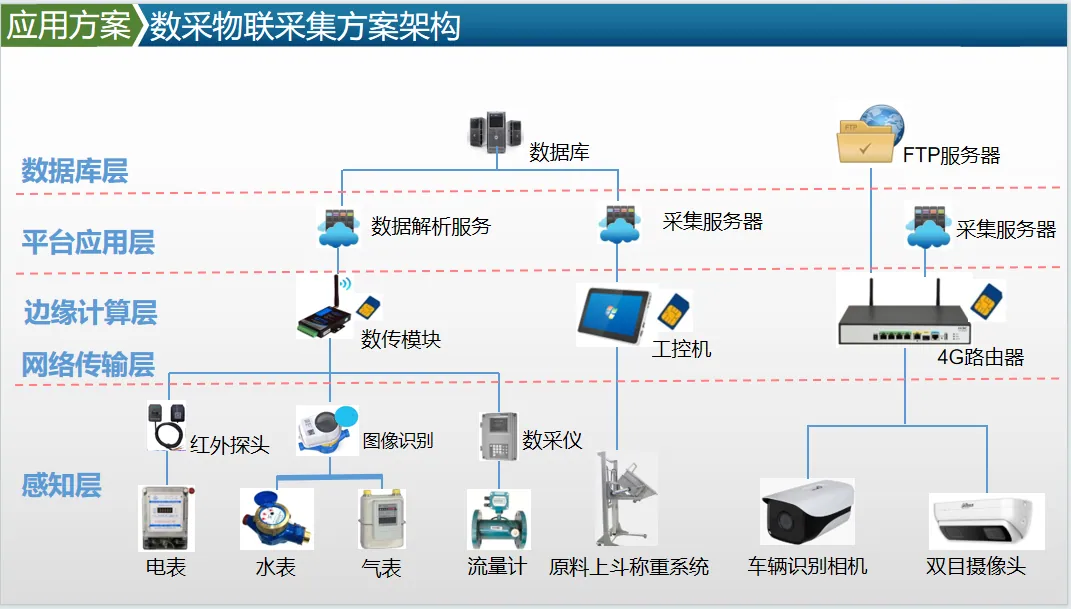
1.2.1 Perception layer: accurate acquisition across the site (the digital foundation)
The perception layer sits at the front of the architecture and collects raw data from the shop floor; it is the source of all digital data. Industrial sensors and acquisition terminals cover three groups of scenarios — equipment status, production environment and energy consumption — converting physical signals into digital data and replacing manual logging and on-foot inspection.
1.2.2 Network transmission layer: stable multi-link data transfer
Plant layouts are complex and cabling difficulty varies, so the design uses a hybrid transmission model — wireless first, wired as a supplement — together with communication gateways and protocol converters. These forward data, unify protocols and encrypt links, giving reliable long-distance transfer while resolving the problem of incompatible protocols between devices.
1.2.3 Edge computing layer: local preprocessing and real-time response
Edge terminals and lightweight data acquisition software are deployed on site and handle data parsing, cleaning, exception filtering, local storage and threshold alarms. This reduces the load on the cloud platform, and during a network outage local data is not lost and on-site alarms still trigger, which raises system reliability.
1.2.4 Platform application layer: data visualization and integrated control
Based on the valid data collected and processed, host monitoring systems, integrated management platforms and visualization dashboards provide real-time display, trend analysis, report statistics and remote management. Workshop supervisors and management get intuitive digital control, and the system can also connect upward to the city-level public service platform.
2. The full IoT product range
Shanghai Daq IoT offers two product matrices, hardware and software, covering the entire chain: data acquisition, communication, protocol conversion, system control and visualization. All of it is tuned for the working conditions of SMEs in the three industries, with a high degree of standardization, plug-and-play operation and strong adaptability.
2.1 Hardware (core devices for perception and transmission)
Hardware is the physical carrier of an IoT deployment. The range falls into four groups — industrial sensors, data acquisition units, energy statistics devices, and communication management units with protocol converters — covering on-site acquisition and communication needs.
2.1.1 Industrial sensors
As the front-end units of data acquisition, the sensors are low-power, rugged and easy to install, support wireless transmission, and are widely used for equipment and environmental monitoring.
Equipment status sensors
Vibration sensor: magnetic mounting, with no drilling or machine teardown. It continuously collects vibration amplitude and frequency from large rotating equipment such as motors, mixers, extruders and fans, and combines them with operating parameters to identify abnormal wear, looseness and hidden faults — enabling predictive maintenance and greatly reducing the risk of unplanned downtime. Protection rating IP65, suited to hot, dusty industrial environments.
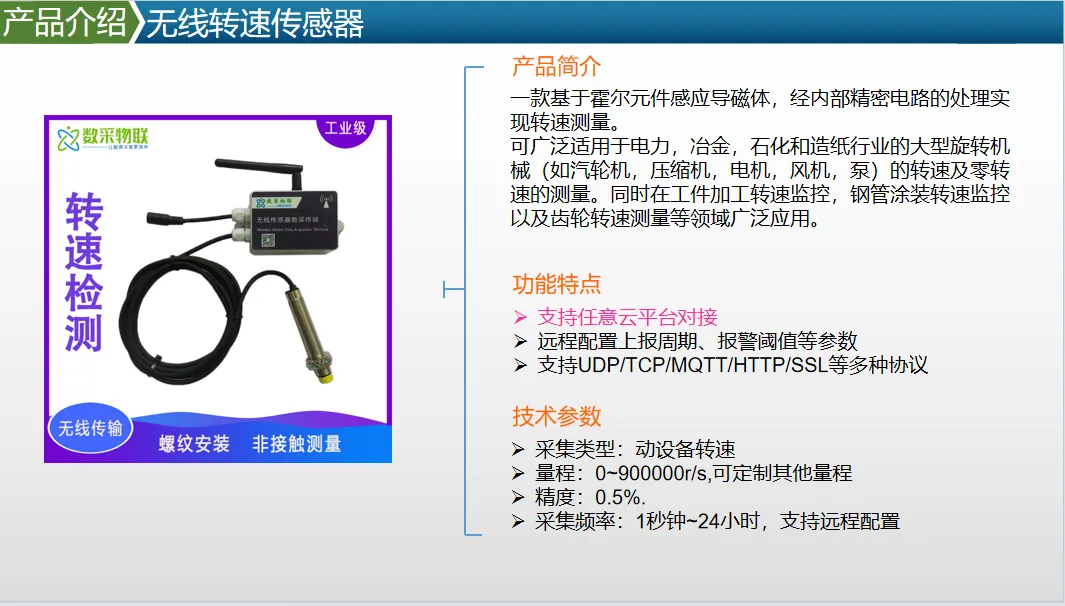
Speed sensor: non-contact measurement of rotational speed, with no physical contact wear. It suits continuous production lines in new materials and food processing and monitors equipment condition in real time.
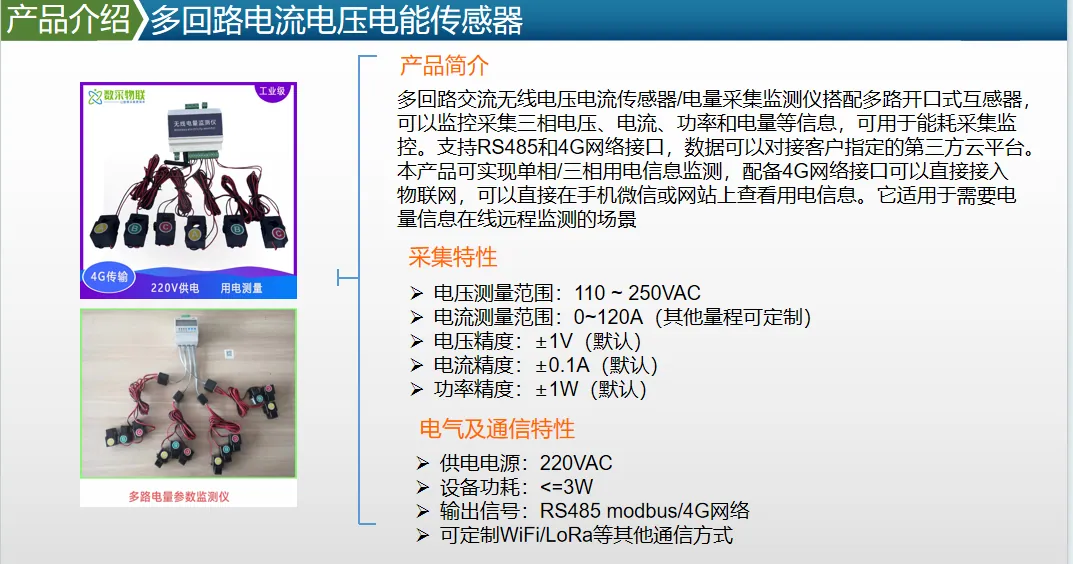
Current/voltage acquisition terminal: a clamp-on current transformer design that clips quickly onto the equipment supply cable and collects load current and voltage, showing whether a machine is idling, overloaded or running abnormally. It is universal across industries and easy to install.
Environmental monitoring sensors
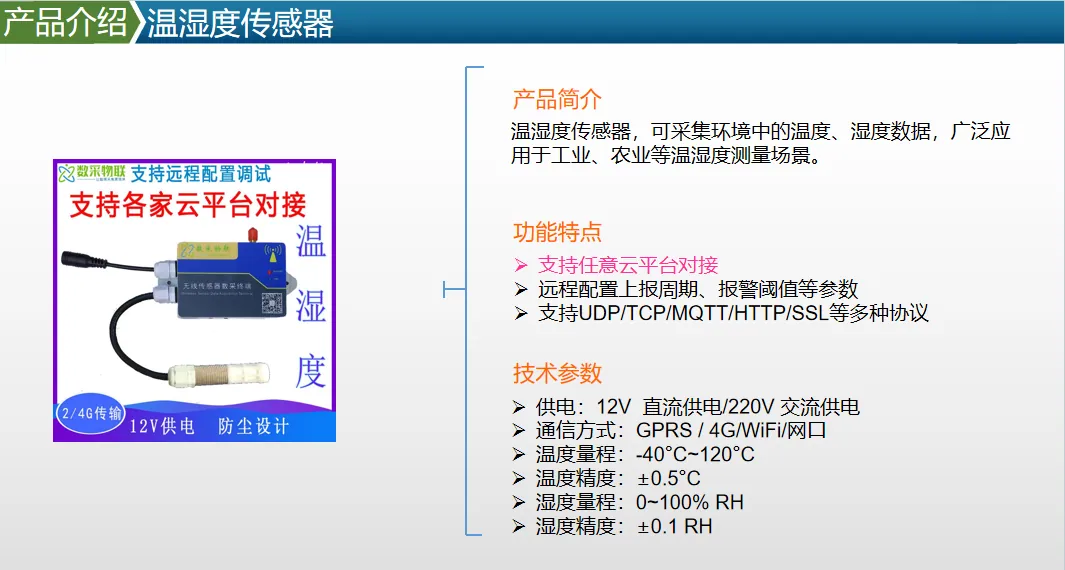
Temperature and humidity sensor: available in standard and high-precision versions. The standard version serves electronics workshops and general storage areas; the high-precision version is designed for green food processing and is deployed in production halls, raw material warehouses and finished-goods cold stores. Data is retained long term, meeting the regulatory requirements of food safety and product traceability. The device supports LoRa/4G wireless transmission and runs for more than three years on battery.
Submersible level sensor: used mainly for material level and liquid level monitoring in grain and oil storage tanks, raw material silos and liquid reaction vessels. It tracks material stock in real time and supports fine-grained material management.
2.1.2 Data acquisition units
These are the on-site data aggregation nodes. They receive data uploaded by the sensors, consolidate it and pass it upward — the link between the perception and transmission layers.
Wireless data acquisition instrument: integrates LoRa, 4G and NB-IoT communication modules to suit different plant network conditions. One unit handles data from dozens of sensor channels and supports outdoor cabling-free deployment, which fits dispersed workshops and remote warehouses.
General-purpose industrial acquisition gateway: wired and wireless dual-mode design, compatible with RS485, Ethernet and other mainstream interfaces. It connects to legacy PLCs, instruments and automation equipment and brings multiple data sources into one system — the workhorse of digital retrofits in SME workshops.
All-in-one acquisition terminal: a highly integrated design that combines acquisition, transmission and simple storage in a compact, plug-and-play unit. It is built for lightweight retrofits at micro and small enterprises, greatly reducing deployment effort and cost.
2.1.3 Energy statistics products
Built around energy-saving control and digital energy statistics, these acquisition devices need no replacement of the plant’s existing water, electricity and gas meters, so the barrier to retrofit is very low.
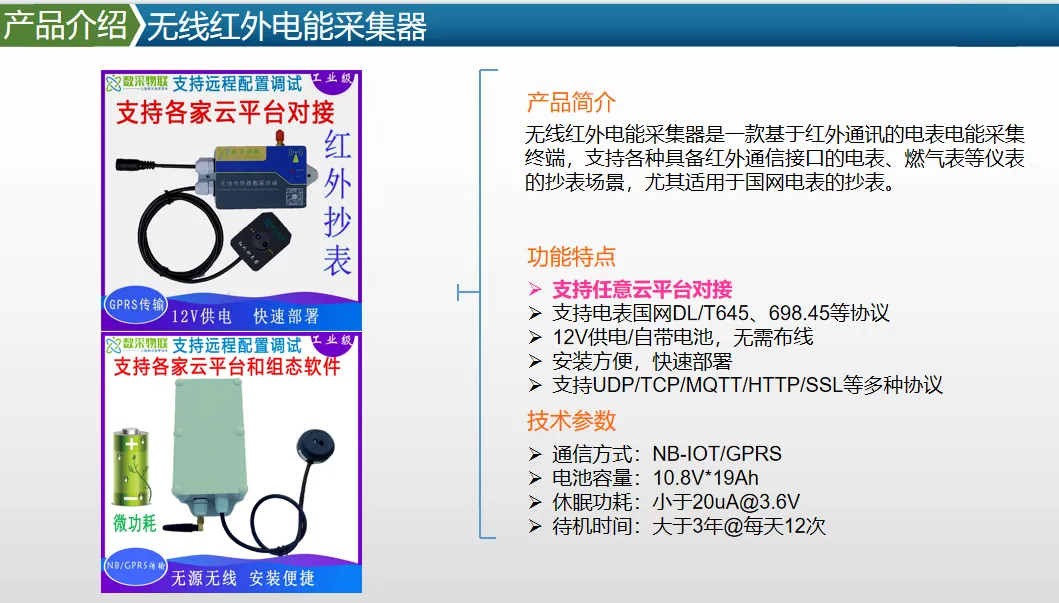
Infrared meter reading terminal: uses infrared communication to connect to conventional mechanical and electronic electricity, water and gas meters and reads consumption data automatically. It supports DL/T 645, DL/T 698 and other State Grid standard protocols, delivering automatic collection and scheduled reporting instead of manual reading.
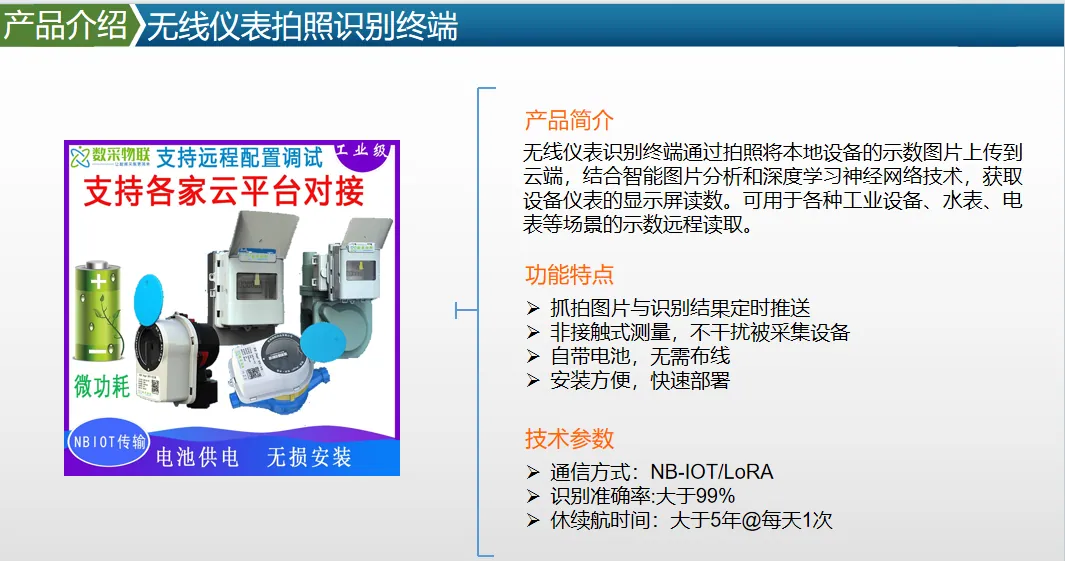
Camera-based energy data terminal: for older pointer instruments without a communication interface, it reads the dial through image recognition. It suits SMEs with a large share of legacy meters and solves the digitalization of old energy metering equipment.
Sub-metering energy statistics collector: allocates energy consumption by workshop, line or individual machine, pinpointing the points that use the most energy. The data supports energy-saving retrofits and consumption assessment, making it a core option for energy-intensive new material plants.
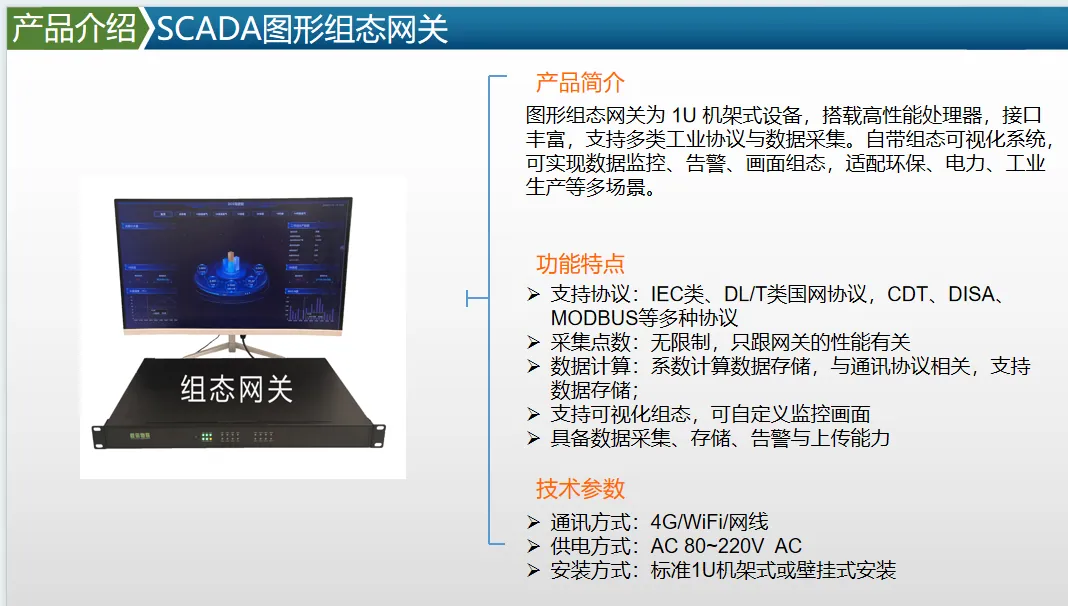
2.1.4 Communication management units and protocol converters
Industrial sites mix many equipment brands and protocols, and data silos are a serious problem. This product group delivers multi-protocol interoperability and is the core of networking heterogeneous equipment.
Protocol converter: a compact modular device that converts between mainstream industrial protocols such as Modbus RTU/TCP, MQTT and OPC UA. Small and flexible to deploy, it suits a single workshop with a few heterogeneous devices and offers good value.
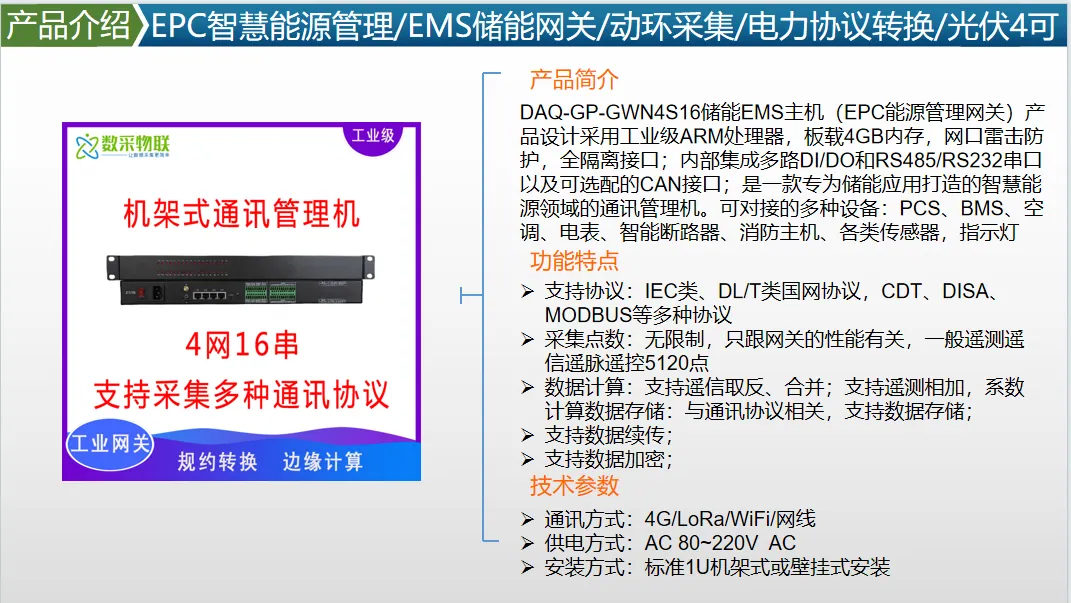
Industrial communication management unit: multi-interface, multi-channel design. One unit connects 30–50 industrial devices running different protocols and handles protocol unification, data forwarding and routing. It suits larger enterprises and digital workshops with many devices in one place. Industrial-grade immunity to interference keeps it running in workshops with strong electromagnetic noise.
2.2 Software products (core systems at the edge and application layers)
The software complements the hardware and covers the whole chain, from low-level data acquisition and local monitoring to cloud management and visualization. The result is a layered, upgradable software matrix with simple, intuitive screens that non-specialist staff can operate.
2.2.1 Industrial data acquisition software
DAQforIIOT is the industrial data acquisition system installed on edge gateways and local terminals, and the low-level core of the software stack. It receives data from the front-end hardware, parses protocols, cleans data and filters outliers. A local database stores data for a retention period configured to meet traceability and regulatory requirements. Built-in threshold logic triggers an alarm on site when equipment parameters, environmental indicators or energy data leave the preset range, with a response delay below 1 second. The software supports embedded deployment with no separate server, and its lightweight footprint suits the vast majority of SMEs.
2.2.2 Host monitoring system
This is the entry-level software for workshop-level local control and comes standard with every retrofit. It runs on the PC in the workshop duty room or control room, with a graphical interface and a fully Chinese UI, and focuses on practical functions: real-time display of the status and parameters of every connected device; historical data queries and simple trend curves for a single device; automatic daily and weekly reports; local storage of alarm records. No complex configuration is required, and front-line operators can use it independently after brief training, which addresses the shortage of specialist O&M staff at SMEs.
2.2.3 Integrated monitoring platform
A cloud or on-premises management platform for an entire plant or multiple sites, offered as an upgrade for larger and specialized SMEs. Beyond basic monitoring it adds higher-level management: centralized aggregation and remote access across workshops and sites; trend analysis and year-on-year/month-on-month statistics; energy breakdown analysis and equipment utilization (OEE) statistics; maintenance work orders and fault logs. Role-based permissions distinguish operator, administrator and management views, matching fine-grained management needs. Standard interfaces are reserved for seamless connection to the public platform of the SME digital transformation empowerment center.
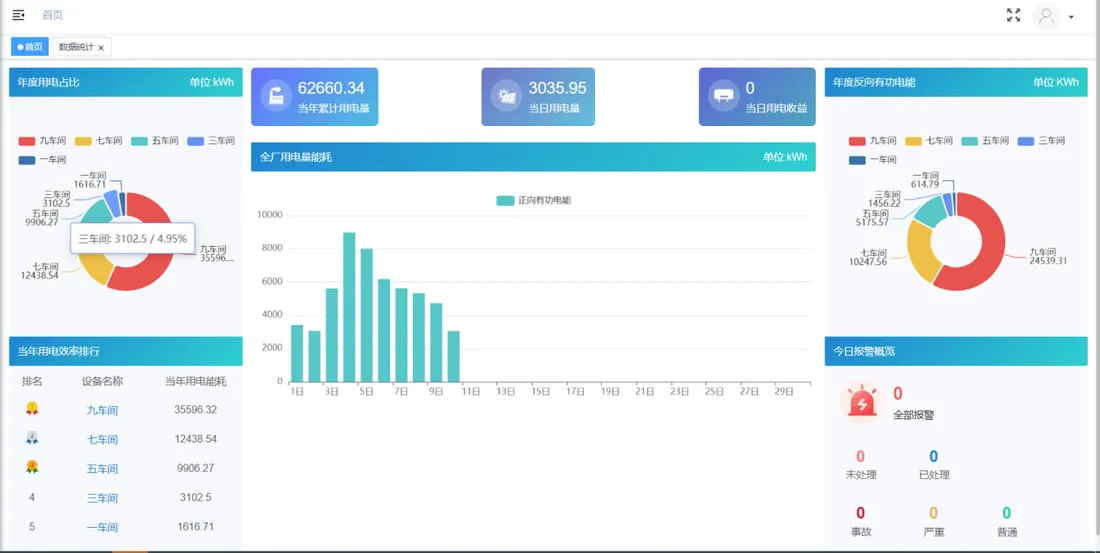
2.2.4 Visualization dashboard system
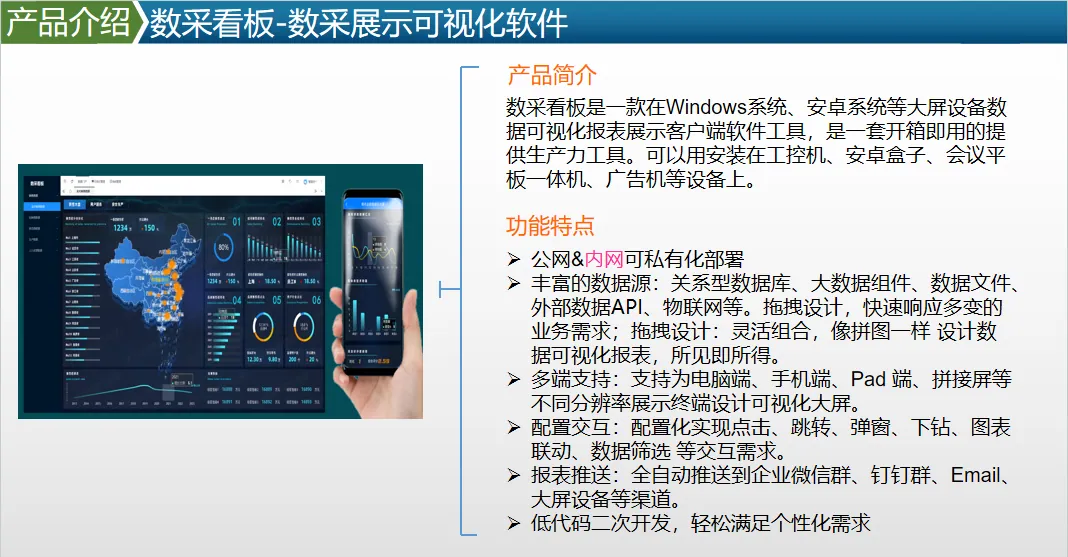
A high-end visualization application for digital workshops, smart factories and transformation benchmark enterprises, and the main showcase for digital results. Drawing on plant-wide data, it presents output, equipment status, total energy consumption, environmental parameters, fault alarms and analysis conclusions in dynamic charts, numeric boards and topology diagrams. It can be installed in the plant control hall or showroom: it gives management a plant-wide view and also serves as a showcase window for digital transformation, meeting the requirements for benchmark and level-4 digital enterprise programs. Layouts are customizable and data modules can be added or removed, so the displayed content can be tailored to the industry.
3. Industry-specific IoT solutions
Based on the processes, control priorities and equipment characteristics of the three pilot industries, and using the hardware and software above, the company builds differentiated IoT solutions. All of them are modular, with a basic version (meeting level-2 digitalization standards) and an upgraded version (for level-4 digital enterprises, benchmark enterprises and smart factories). The deployment model is mature and the technical routes fit actual industry conditions.
3.1 Smart electrical and electronic information manufacturing
3.1.1 Industry pain points and transformation needs
The industry is dominated by component processing and appliance assembly plants. Equipment types are diverse, old and new machines are mixed, and protocol standards differ. Production halls and component warehouses have strict temperature and humidity requirements. Inspection and data logging depend on manual work, which is slow and error-prone. Companies generally need equipment status monitoring, environmental control, energy statistics and simple data traceability.
3.1.2 Basic version (standard for SMEs across the industry)
Perception layer: temperature and humidity sensors (production halls, raw material warehouses), current acquisition terminals (mounting machines, soldering machines, burn-in equipment) and infrared meter reading terminals (plant-wide electricity metering), all with wireless transmission and magnetic or clamp mounting, installed without stopping production.
Transmission layer: LoRa wireless gateways plus small protocol converters unify the data protocols of workshop equipment and aggregate and forward the data.
Software layer: embedded data acquisition software plus a local host monitoring system provide real-time monitoring of environment, equipment and energy data, local alarms and basic reports, meeting the requirements of the baseline digitalization assessment.
3.1.3 Upgraded version (for benchmark enterprises and digital workshops)
Building on the basic version: vibration sensors are added for fault warning on high-load equipment such as soldering and burn-in machines; multi-channel communication management units connect automation equipment of different brands across the workshop; a cloud integrated monitoring platform and a visualization dashboard enable unified management of multiple lines, production data traceability and full-process equipment maintenance, creating a digital workshop for the electronics industry.
3.2 New material products manufacturing
3.2.1 Industry pain points and transformation needs
The sector covers new building materials, polymer materials and refractory materials. Production is continuous, with many large rotating machines and high-temperature equipment. Equipment runs at full load for long periods and an unexpected stop is costly. Energy intensity is high across the industry, putting pressure on energy management. Manual inspection has limited coverage, so hidden faults are found late. The core needs are condition monitoring of large equipment, fault warning, fine-grained energy control and production temperature monitoring.
3.2.2 Basic version (standard for SMEs across the industry)
Perception layer: vibration sensors and speed sensors on core rotating equipment (mixers, extruders, fans), temperature sensors (drying and sintering shops), and a full set of energy acquisition terminals covering water, electricity and gas.
Transmission layer: industrial-grade wireless gateways and communication management units, suited to long-distance transmission and strong electromagnetic interference in large plants, keeping data flowing reliably and protocols interoperable.
Software layer: data acquisition software working with the host system, focused on real-time alarms for abnormal vibration, overtemperature and overload, and automatic energy statistics — replacing manual inspection and meter reading.
3.2.3 Upgraded version (for benchmark enterprises and smart factories)
Pressure sensors and submersible level sensors are added to complete process parameter acquisition. Edge computing supports a simple predictive analysis model that anticipates equipment faults. An integrated monitoring platform and visualization dashboard report equipment utilization and energy per unit of product, helping the company cut costs, raise efficiency and move toward greener production — the basis of a smart factory in the new materials industry.
3.3 Green food processing
3.3.1 Industry pain points and transformation needs
Grain and oil, snack food and beverage processors are tightly regulated on food safety. Temperature, humidity and cleanliness in production halls, cold stores and warehouses must be traceable end to end. Production and cold-chain equipment is dispersed, making unified control difficult. Water, gas and energy are used frequently and must be reported in a compliant way. The core needs are full traceability of environmental data, cold-chain equipment monitoring, energy statistics and retention of production data.
3.3.2 Basic version (standard for SMEs across the industry)
Perception layer: high-precision temperature and humidity sensors (production halls, cold stores, finished-goods warehouses), ultrasonic level sensors (raw material tanks) and combined water/electricity/gas energy terminals. All monitoring points report automatically.
Transmission layer: WiFi plus LoRa hybrid gateways, matching the dispersed layout of equipment and warehouses and keeping data from scattered points flowing normally.
Software layer: data acquisition software and the host system, with a long-term data retention policy. Environmental and energy data is archived automatically to meet food traceability and regulatory requirements, and on-site exception alarms are raised.
3.3.3 Upgraded version (for benchmark enterprises and digital workshops)
Cold-chain equipment status terminals and air cleanliness sensors are added to complete environmental monitoring across the production chain. The cloud platform is upgraded with a data traceability module that follows the process from raw material intake to finished-goods dispatch. A visualization dashboard presents workshop environment, cold-chain status and energy data in one place, creating a digital demonstration workshop for food processing.
4. Core technical advantages and application value
4.1 Core technical advantages
Full protocol compatibility that solves heterogeneous equipment. The communication and conversion devices support more than twenty mainstream industrial protocols and adapt to most brands and generations of industrial equipment on site. Existing production equipment is not replaced, which protects the installed asset base and lowers retrofit cost.
Non-intrusive retrofit that does not disturb production. Sensors and acquisition terminals are mostly magnetic, clamp-mounted or non-contact infrared, so there is no machine teardown and no large-scale cabling. Installation is quick, which removes the fear of stopping production or disrupting it.
Deep hardware-software integration for stability. Hardware and software are both developed in-house and tuned together across the whole chain, so there are no third-party compatibility issues. Mean time between failures is long, matching 7×24 continuous operation on an industrial site.
Modular flexibility for companies of different sizes. Products and solutions are fully modular. A micro enterprise can start with a minimal combination to reach basic digitalization, while larger and benchmark companies can extend the functions step by step — the pace and the investment stay under the company’s own control.
Lightweight architecture with a low barrier to operation. Software interfaces are visual and simplified, hardware needs no routine maintenance, and no dedicated IoT engineer is required — a good match for the staffing reality at SMEs.
4.2 Value for the enterprise
Lower labor cost: automatic acquisition, alarming and statistics replace manual meter reading and on-foot inspection, cutting repetitive work and allowing staff to be redeployed.
Lower production risk: real-time condition monitoring and early fault warning greatly reduce the chance of unexpected equipment stops. Continuous environmental monitoring avoids compliance risk in the food and electronics industries.
Energy savings and efficiency: itemized energy statistics pinpoint where energy is wasted, supporting energy-saving retrofits and lowering energy cost. Digital control of production data raises overall production management efficiency.
A firmer digital foundation: low-level data is connected and digitalization assessment standards are met, which supports applications for specialized and innovative (SRDI) status and digital benchmark recognition, and helps the company benefit from local policy support.
Room to grow: the architecture reserves expansion interfaces. Smart warehousing, smart manufacturing and supply-chain data links can later be added on top of the existing system, protecting the digital transformation investment.
In the broader trend of SME digital transformation, industrial IoT is the foundation that connects the last mile of shop-floor data
Shanghai Daq IoT matches the current situation and transformation needs of SMEs in the three leading industries with a full range of industrial hardware, integrated companion software and scenario-based solutions by industry.
The solution is grounded in actual industrial conditions and built on proven technology, standardized products and a lightweight model. It helps micro, small and medium enterprises complete a basic digital retrofit quickly and meet compliance, control and policy assessment requirements, and it can keep evolving to support a digital workshop, a smart factory or a transformation benchmark.
Looking ahead, Shanghai Daq IoT will continue to build on its technology and product strengths, refining solutions and performance to give SMEs highly adaptable, reliable and cost-effective IoT support for digital transformation — and to help regional manufacturing move toward the integration of the digital and physical, higher quality and efficiency, and greener growth.