
How Do You Solve Meter Reading for Instruments Without a Communication Interface in a Petrochemical Workshop? An Intranet Vision Answer
In high-precision production environments such as petrochemical plants, mechanical analog gauges are widely used for their stability. They have no external communication interface, the site environment is complex, and manual reading is slow and lagged — a long-standing pain point in industrial data acquisition. The spinning line of the 1,500 t carbon fiber unit at Sinopec Shanghai Petrochemical Company Limited faced exactly this problem.
1. Core pain points: why traditional meter reading struggles
The project covers lines 1–4 of the spinning machines in the 1,500 t carbon fiber unit at Sinopec Shanghai Petrochemical. The workshop is fitted with a large number of mechanical pressure gauges. These instruments have no data output interface and cannot connect directly to an automation system. Corrosive gas is present on site, so standard equipment fails easily, and routing cables is difficult and carries high safety risk. Manual reading cannot deliver real-time monitoring, and the data cannot support line operation analysis in time.
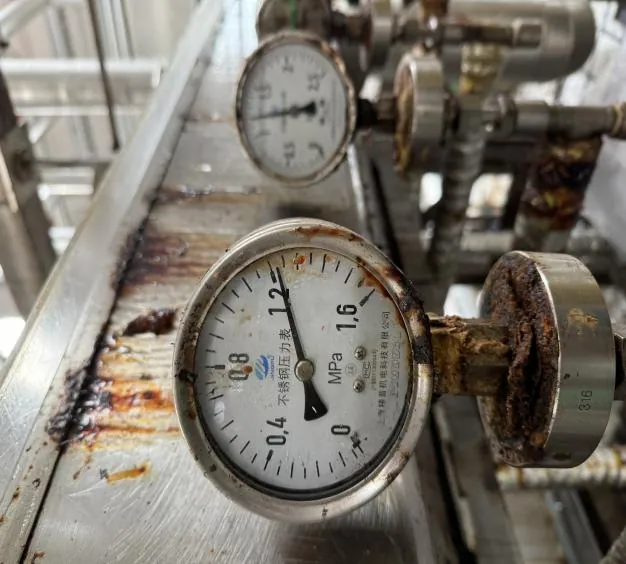
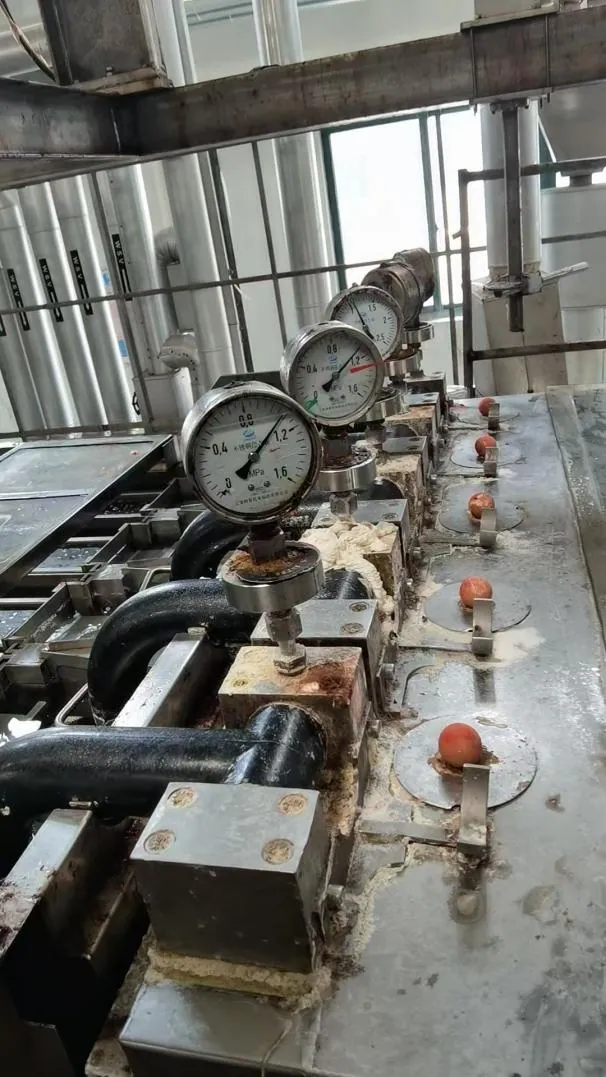
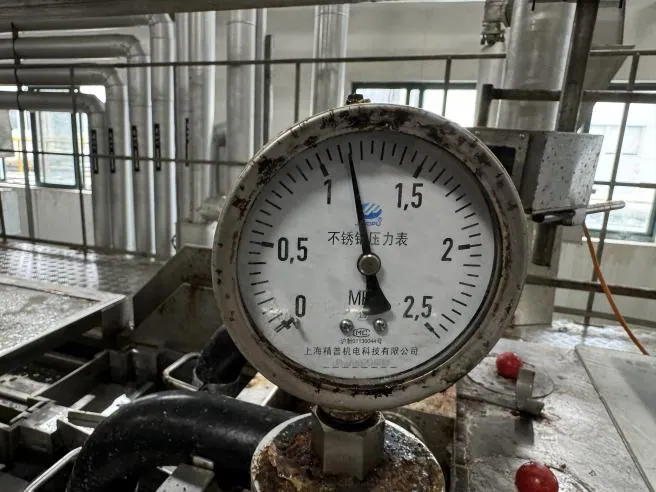
To achieve real-time data acquisition and effective monitoring on the line, the project worked with Changjiang Institute to develop a custom intranet vision recognition wireless meter reading solution, using technology to break the traditional reading bottleneck.
2. Technical approach: vision, wireless and intranet for accurate reading
Given the structure of the pointer gauges and the corrosive environment, the project adopted a technical route of camera capture + wired transmission + vision recognition: the camera photographs the dial, the software recognizes the pointer reading, and the data is then read, stored and analyzed. One camera covers 1–5 gauges, which suits the dense installation on site.
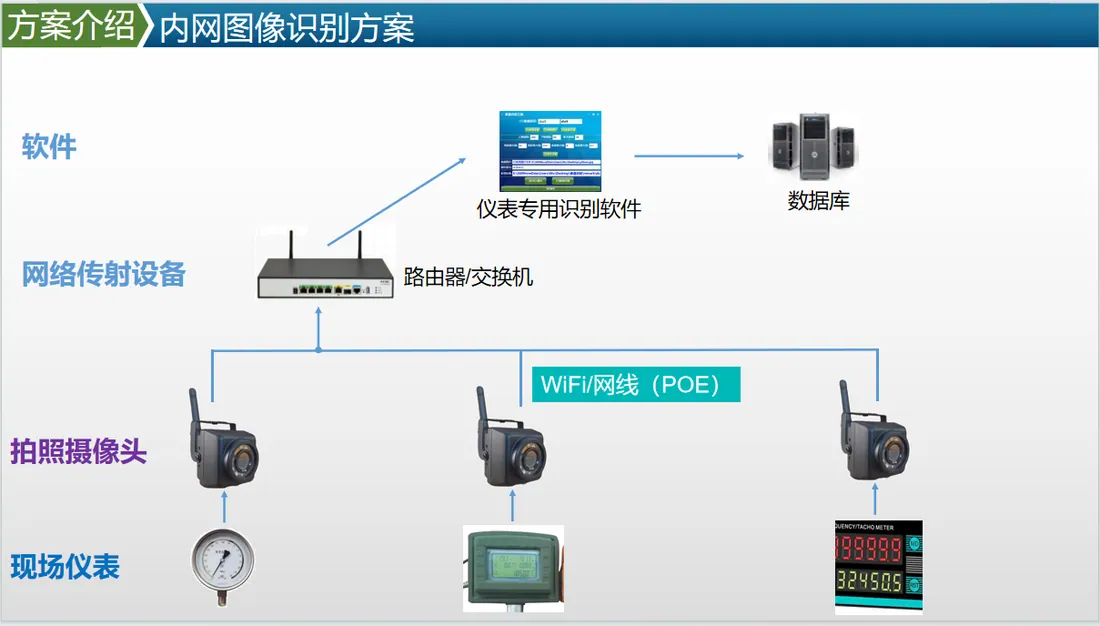
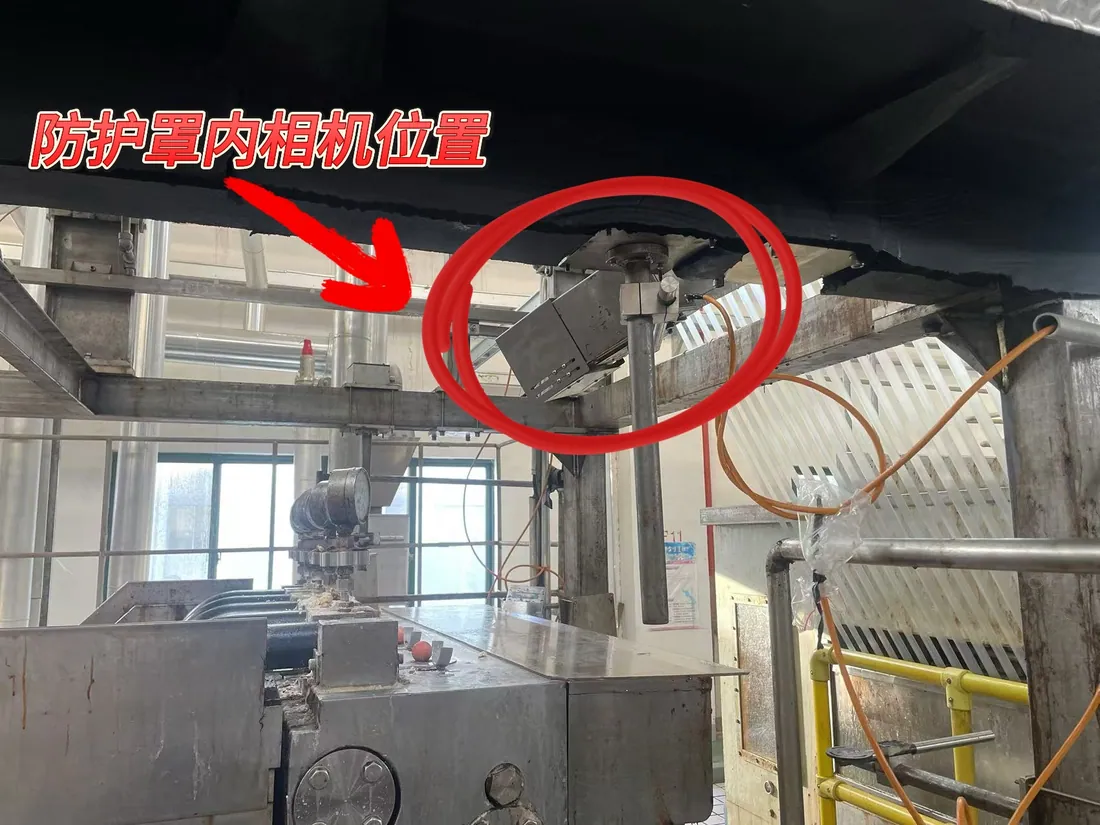
The hardware is the SC-GP-CAMpoe timed-capture camera (PoE version). Power and signal share one network cable, which greatly simplifies installation and reduces cabling hazards. For the corrosive environment, a custom protective enclosure keeps the device running reliably.
The system runs entirely on the intranet. Data never leaves the plant, so security and stability are both maintained.
3. Key technical specifications: how reliable is the solution?
The solution is designed strictly to industrial-grade requirements, and its core specifications meet the demanding standards of petrochemical sites:
Accurate recognition: with a clean, unobstructed dial, recognition accuracy is ≥99.5%, and the image is sharp enough to read graduations and digits;
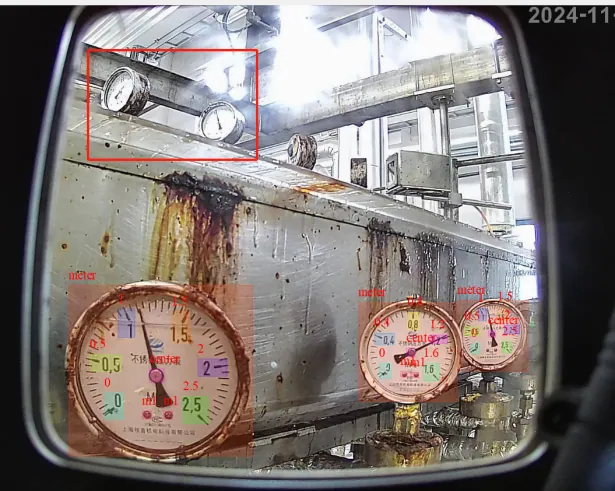
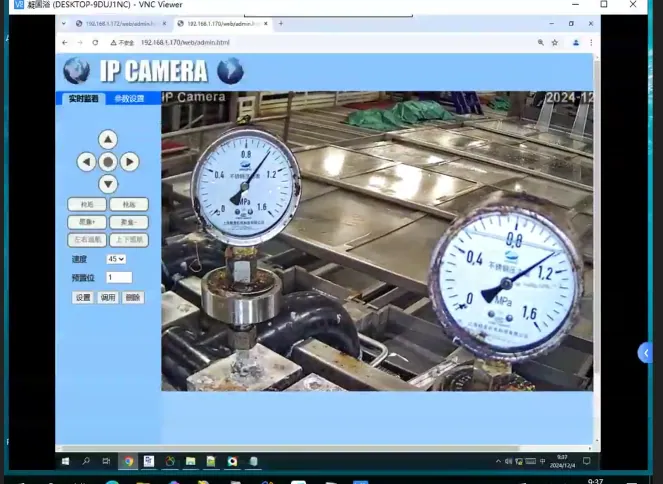
Fast acquisition: reading as often as once per minute, adjustable to your needs;
Stable operation: continuous stable operation for ≥60 days, software fault downtime <1%, fault resolution <24 hours;
Durable storage: data and images retained for ≥6 months, with traceable queries;
Environmental fit: IP65 protection and an operating temperature of −10 °C to 50 °C, suited to the complex workshop environment.
4. Site implementation: handling corrosion and interference
Four cameras were deployed on site: two cover two gauges each and two cover three gauges each, with mounting optimized to match the gauge layout.
Commissioning focused on environmental interference: removing labels from the dials, preventing fogging inside the protective covers, adjusting mounting angles to eliminate light reflections, and cleaning the dials to keep recognition sharp — each factor affecting accuracy was eliminated one by one. Custom protective housings resist corrosion and keep the devices working stably over the long term.
5. Results: what vision meter reading delivers
The project achieved automated, intranet-based and visualized reading of mechanical analog gauges. The system recognizes instrument values precisely and stores them in the database automatically, matching each image path to its recognition result one to one, so the data can be queried, traced and analyzed.
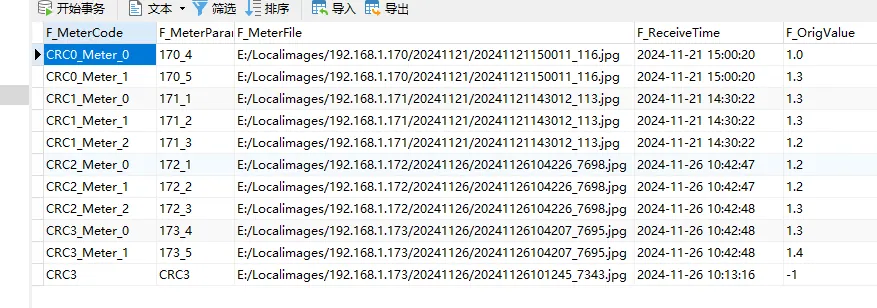
The solution requires no modification to the instruments and no complex cabling. It suits corrosive, high-risk environments and resolves the data acquisition problem for instruments without a communication interface, offering a repeatable technical model for intelligent meter reading and digital upgrading of production lines in the petrochemical industry.